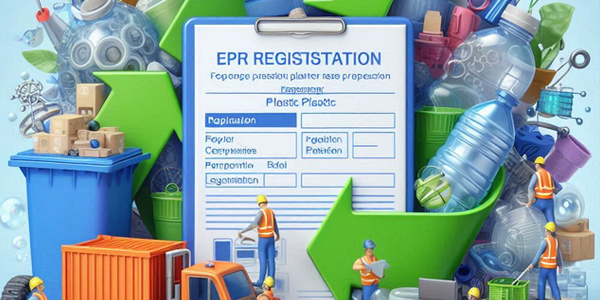
In today’s consumer-driven economy, brands play a powerful role in shaping market dynamics, and with this influence comes responsibility for environmental impacts. The Plastic Waste Management Rules, 2016 recognize this reality by defining brand owners as persons or companies selling commodities under registered brand labels and placing specific EPR obligations upon them. Whether operating through traditional retail channels, modern supermarket chains, or burgeoning e-commerce platforms, brand owners who package their products in plastic materials bear responsibility for managing the post-consumer waste generated from their branded packaging throughout India.
Brand owners must distinguish their obligations from those of producers and importers, though the fundamental principle remains consistent—taking responsibility for plastic packaging waste associated with products carrying their brand identity.
A brand owner who also manufactures or imports packaging materials faces dual obligations under both categories.The registration process through CPCB or State Pollution Control Boards requires brand owners to articulate their EPR strategy, detailing collection mechanisms across their distribution networks and recycling partnerships.
The EPR targets for brand owners follow the same progressive structure as producers and importers, calculated based on the average weight of virgin plastic packaging procured and released in the previous two financial years plus any pre-consumer plastic packaging waste generated. Beginning at 25% for 2021-22, the collection target reached 70% in 2022-23 and 100% from 2023-24 onwards. Brand owners must ensure this collected packaging waste undergoes actual recycling according to category-wise minimum thresholds, creating tangible environmental outcomes rather than mere collection statistics. The requirement to use recycled plastic content in packaging introduces another dimension, with brand owners required to incorporate 30-60% recycled content in rigid packaging and 10-20% in flexible packaging depending on the category and year.
Brand owners face unique challenges in EPR implementation given their diverse distribution networks spanning urban and rural areas, multiple retail formats, and varying consumer touchpoints. Unlike producers with centralized manufacturing locations, brand owners must create decentralized collection systems reaching wherever their branded products are sold and consumed. This typically involves partnerships with retailers, installation of collection points at prominent locations, engagement of waste pickers and collection agencies, and consumer awareness campaigns encouraging return of used packaging. Brand owners often join Producer Responsibility Organizations that aggregate obligations across multiple brands, achieving economies of scale in collection and recycling operations while ensuring compliance across geographical areas. The certification and trading mechanism allows brand owners to procure EPR certificates from Plastic Waste Processors corresponding to their obligation quantities. These certificates, generated through the CPCB portal based on verified recycling activities, provide documented proof of EPR compliance.
Brand owners must maintain comprehensive records linking packaging procurement to EPR compliance, documenting plastic types and quantities used in different product lines, tracking collection volumes across regions, and filing quarterly and annual returns through the centralized portal. The annual return deadline of June 30 requires brand owners to reconcile their packaging usage for the entire financial year with certificates obtained from recyclers, demonstrating fulfillment of both collection and recycling obligations.
Non-compliance attracts environmental compensation calculated per kilogram of shortfall, with rates varying by plastic category, making timely compliance economically prudent compared to penalties.
For brand owners, EPR compliance transcends regulatory requirements to become a brand value proposition. Consumers increasingly favor environmentally responsible brands, making visible EPR initiatives—collection drives, recycling partnerships, use of recycled content, and sustainable packaging innovations—valuable marketing tools. Many leading brands actively communicate their EPR achievements through packaging labels, marketing campaigns, and sustainability reports, converting regulatory compliance into competitive advantage. The framework encourages brands to rethink packaging design, minimize plastic usage, improve recyclability, and collaborate across value chains to create circular systems.