

Table of Contents
ToggleWhat Are SMEs?
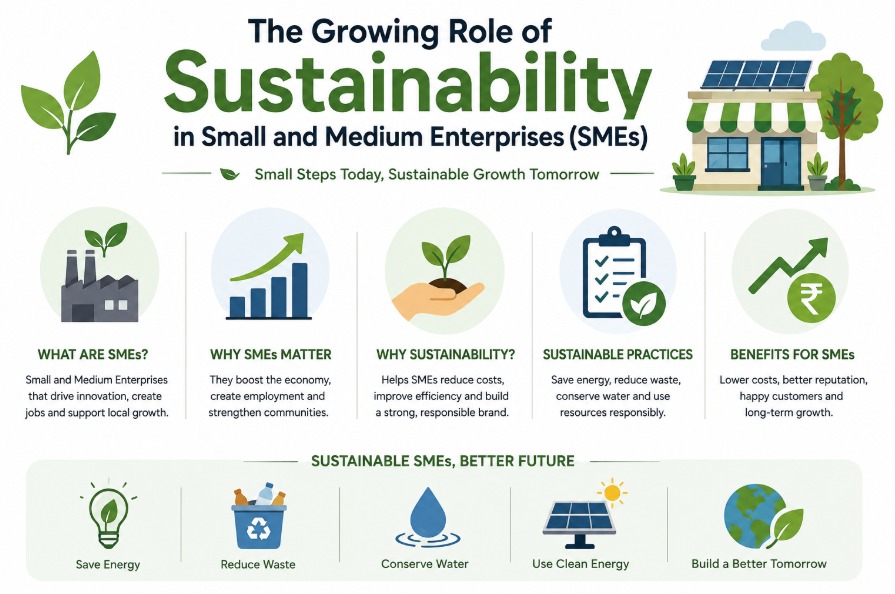
SMEs, or Small and Medium Enterprises, are businesses that operate on a relatively smaller scale compared to large corporations. They include manufacturers, retailers, service providers, startups, and family-owned businesses that contribute significantly to economic growth and employment generation. SMEs form the backbone of many economies by supporting innovation, entrepreneurship, and local development. Despite their size, their collective environmental and economic impact is substantial.Why Are SMEs Important to the Economy?
SMEs play a critical role in creating jobs, supporting local industries, and driving economic development. They contribute significantly to national income and often serve as suppliers, service providers, and business partners to larger organizations. In many countries, SMEs account for a large share of businesses and employment opportunities. Their growth contributes to innovation, competitiveness, and regional development.Why Is Sustainability Becoming Important for SMEs?
Sustainability is no longer limited to large corporations. Customers, investors, regulators, and business partners are increasingly expecting businesses of all sizes to operate responsibly and reduce their environmental impact. For SMEs, sustainability can help improve efficiency, reduce costs, strengthen reputation, and prepare for future environmental regulations. Sustainable business practices are becoming an important part of long-term business success.What Environmental Challenges Do SMEs Face?
SMEs often face challenges related to energy consumption, waste generation, water usage, resource management, and environmental compliance. Limited financial resources and technical expertise can sometimes make it difficult to implement sustainability initiatives. As environmental expectations continue to evolve, SMEs may also need to address issues such as carbon emissions, responsible sourcing, waste management, and regulatory compliance to remain competitive.How Can SMEs Adopt Sustainable Business Practices?
SMEs can begin by improving energy efficiency, reducing waste generation, conserving water, and encouraging responsible resource use. Simple actions such as switching to energy-efficient equipment, reducing paper consumption, and improving waste segregation can create measurable benefits. Businesses can also explore renewable energy solutions, sustainable procurement practices, recycling initiatives, and environmental awareness programs for employees. Small improvements can collectively lead to significant long-term results.What Are the Benefits of Sustainability for SMEs?
Sustainable practices can help SMEs lower operational costs, improve resource efficiency, and reduce environmental risks. Energy conservation, waste reduction, and efficient resource management often lead to financial savings over time. Sustainability can also improve customer trust, strengthen brand reputation, attract environmentally conscious consumers, and create new business opportunities. Many larger companies increasingly prefer to work with suppliers that demonstrate responsible business practices.How Can Technology Support Sustainable SMEs?
Technology can help SMEs improve efficiency, monitor resource consumption, and reduce operational waste. Digital systems can assist with energy management, waste tracking, compliance monitoring, and sustainability reporting. Emerging technologies such as renewable energy systems, smart monitoring solutions, and resource management tools are becoming increasingly accessible for small and medium-sized businesses. These solutions can help SMEs improve both environmental and business performance.What Is the Future of Sustainable SMEs?
The future of SMEs is expected to be increasingly linked with sustainability, innovation, and responsible business practices. As environmental awareness grows, businesses that adopt sustainable approaches may gain a competitive advantage in the marketplace. Future trends are likely to include greater focus on renewable energy, circular economy practices, resource efficiency, ESG principles, and sustainable supply chains. SMEs that embrace these changes can improve resilience and support long-term growth.Conclusion
SMEs play an essential role in economic development, employment generation, and innovation. As sustainability becomes a growing business priority, small and medium enterprises have an important opportunity to contribute to environmental protection while improving their own operational efficiency and competitiveness. By adopting practical sustainability measures, leveraging technology, and focusing on responsible resource management, SMEs can create long-term value for their businesses, customers, communities, and the environment.Frequently Asked Questions (FAQs)
1. What Does SME Stand For?
SME stands for Small and Medium Enterprise. These businesses operate on a smaller scale than large corporations but play a significant role in economic development and employment generation.
2. What Are Some Simple Sustainable Practices for SMEs?
Examples include reducing energy consumption, minimizing waste, conserving water, improving recycling practices, and adopting digital solutions to reduce resource use.
3. Can Sustainability Help SMEs Save Money?
Yes. Energy efficiency, waste reduction, and resource conservation often reduce operating costs and improve long-term business performance.
4. What Is ESG and Why Is It Relevant for SMEs?
ESG stands for Environmental, Social, and Governance. It helps businesses evaluate and improve their sustainability performance and responsible business practices.
5. Do SMEs Need Large Investments to Become Sustainable?
Not always. Many sustainability initiatives involve simple operational improvements that can be implemented gradually and often result in long-term cost savings.

One thought on “The Growing Role of Sustainability in Small and Medium Enterprises (SMEs)”