Table of Contents
ToggleWhat Is Renewable Energy?
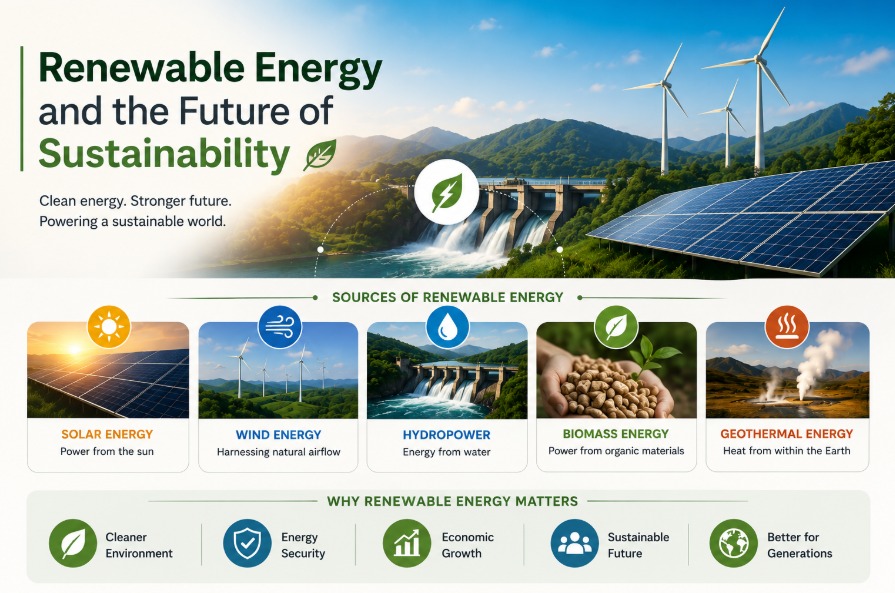
Renewable energy refers to energy generated from natural sources that are continuously replenished by nature. Unlike fossil fuels such as coal, oil, and natural gas, renewable energy sources can be used repeatedly without being depleted. Common renewable energy sources include sunlight, wind, flowing water, biomass, and geothermal heat. These sources play an increasingly important role in meeting global energy demands while reducing environmental impacts.Why Is Renewable Energy Important?
Energy is essential for transportation, industries, homes, businesses, and economic development. However, conventional energy sources often contribute to air pollution, greenhouse gas emissions, and climate change. Renewable energy provides a cleaner alternative by generating power with significantly lower environmental impacts. It helps reduce dependence on fossil fuels while supporting long-term energy security and sustainability goals.Solar Energy: Power from the Sun
Solar energy is one of the most widely used forms of renewable energy. Solar panels capture sunlight and convert it into electricity through photovoltaic technology, making it suitable for homes, businesses, and utility-scale power generation. The declining cost of solar technology and increasing efficiency of solar panels have contributed to its rapid adoption worldwide. Solar energy also helps reduce electricity costs and greenhouse gas emissions over time.Wind Energy: Harnessing Natural Airflow
Wind energy is generated using wind turbines that convert the kinetic energy of moving air into electricity. Wind farms can be located on land or offshore and are capable of producing significant amounts of renewable power. As technology advances, wind energy continues to become more efficient and cost-effective. It plays an important role in reducing carbon emissions and diversifying energy sources in many countries.Hydropower: Energy from Water
Hydropower generates electricity by using the movement of flowing or falling water. It is one of the oldest and most established forms of renewable energy and contributes significantly to global electricity production. Hydroelectric facilities can provide reliable and consistent energy while supporting grid stability. In addition to electricity generation, some hydropower projects also contribute to water storage, irrigation, and flood management.Other Renewable Energy Sources
In addition to solar, wind, and hydropower, renewable energy can also be generated from biomass and geothermal resources. Biomass energy utilizes organic materials such as agricultural residues, forestry waste, and biodegradable materials to produce energy. Geothermal energy uses heat stored beneath the Earth’s surface to generate electricity and provide heating solutions. These technologies help diversify renewable energy portfolios and support energy transition efforts.Benefits of Renewable Energy
Renewable energy offers several environmental, economic, and social benefits. It helps reduce greenhouse gas emissions, improve air quality, conserve natural resources, and lower dependence on fossil fuels. The renewable energy sector also creates employment opportunities, supports technological innovation, and strengthens energy security. As investments continue to increase, renewable energy is becoming a key driver of sustainable development.Challenges of Renewable Energy Adoption
Despite its advantages, renewable energy faces certain challenges. Solar and wind energy generation can depend on weather conditions, creating variability in power production. This often requires energy storage systems and grid modernization. Infrastructure costs, land requirements, and technological limitations can also affect adoption rates in some regions. However, ongoing innovation and policy support continue to improve the feasibility and efficiency of renewable energy systems.How Can Renewable Energy Benefit Businesses?
Renewable energy can help businesses reduce long-term energy costs, improve operational efficiency, and lower their environmental footprint. Many organizations are increasingly adopting renewable energy systems to manage energy expenses and support sustainability initiatives. Using renewable energy can also strengthen a company’s environmental credentials, support ESG objectives, and enhance its reputation among customers, investors, and stakeholders. As sustainability becomes a business priority, renewable energy is emerging as an important competitive advantage.Conclusion
Renewable energy is becoming an essential component of global sustainability efforts. Technologies such as solar, wind, hydropower, biomass, and geothermal energy offer cleaner alternatives to conventional fossil fuels while supporting economic development and environmental protection. As technology continues to advance and renewable energy becomes more accessible, it will play an increasingly important role in creating a sustainable, low-carbon future. Governments, businesses, and individuals all have a role to play in supporting this energy transition.Frequently Asked Questions (FAQs)
1. Which Is the Most Common Renewable Energy Source?
Solar energy is currently one of the most widely adopted renewable energy sources due to its accessibility, scalability, and declining technology costs.
2. What Is the Difference Between Renewable and Non-Renewable Energy?
Renewable energy comes from naturally replenishing resources, while non-renewable energy relies on finite resources such as coal, oil, and natural gas.
3. How Can Businesses Benefit from Renewable Energy?
Businesses can reduce energy costs, improve sustainability performance, strengthen ESG commitments, and enhance their environmental reputation by adopting renewable energy solutions.
4. What Is Biomass Energy?
Biomass energy is produced from organic materials such as agricultural waste, forestry residues, and biodegradable materials that can be converted into energy.
5. What Is the Future of Renewable Energy?
The future of renewable energy is expected to involve greater technological innovation, increased adoption, improved energy storage solutions, and a larger role in achieving global sustainability goals.
Type your paragraph here