Table of Contents
ToggleWhat Is Eco-Tourism?
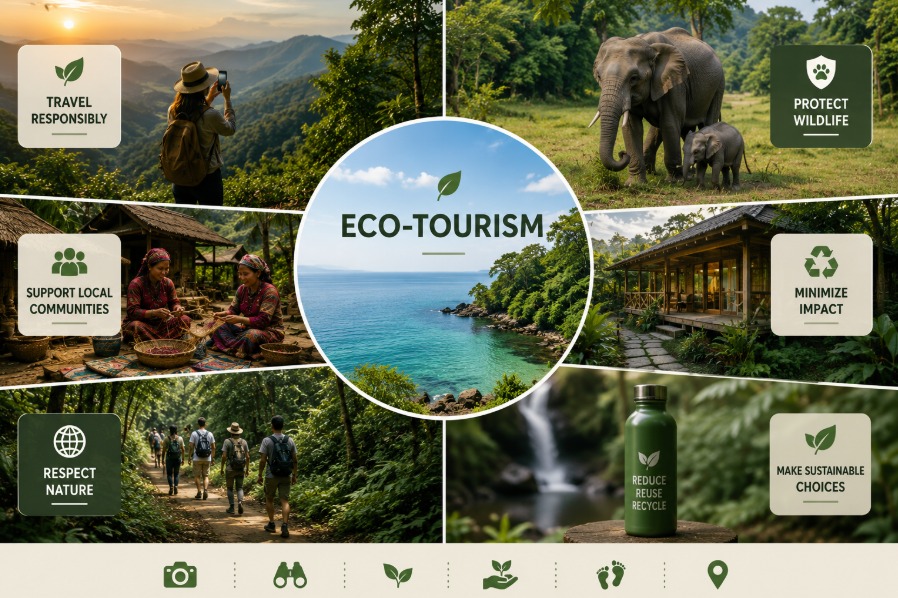
Eco-tourism is a form of responsible travel that focuses on experiencing natural environments while minimizing negative impacts on ecosystems and local communities. It encourages visitors to appreciate nature, wildlife, and cultural heritage in a sustainable manner. Unlike conventional tourism, eco-tourism emphasizes environmental conservation, community participation, and responsible resource use. Its goal is to ensure that tourism activities contribute positively to both people and the environment.Why Is Eco-Tourism Becoming More Important?
As global tourism continues to grow, many natural destinations face challenges such as habitat destruction, pollution, overcrowding, and resource depletion. Eco-tourism has emerged as an approach that promotes sustainable travel while reducing environmental pressures. Increasing awareness of climate change, biodiversity loss, and environmental degradation has also encouraged travelers to seek more responsible tourism options. Eco-tourism helps balance economic development with environmental protection.How Does Eco-Tourism Support Environmental Conservation?
Eco-tourism can generate financial resources that support the protection of forests, wildlife habitats, national parks, wetlands, and other environmentally sensitive areas. Revenue from eco-tourism activities often contributes to conservation programs, habitat restoration, and environmental management initiatives. By creating economic value from healthy ecosystems, eco-tourism provides incentives for governments, businesses, and communities to protect natural resources rather than exploit them unsustainably.How Does Eco-Tourism Benefit Local Communities?
Eco-tourism creates employment opportunities for local residents through activities such as guiding, hospitality services, transportation, handicraft production, and cultural experiences. These opportunities help generate income while reducing dependence on environmentally harmful practices. It can also encourage the preservation of local traditions, cultural heritage, and indigenous knowledge. Community involvement is often a key component of successful eco-tourism initiatives.What Are the Economic Benefits of Eco-Tourism?
Eco-tourism contributes to local and regional economies by attracting visitors and supporting businesses such as hotels, restaurants, transport providers, and tour operators. Revenue generated through tourism can support infrastructure development and community welfare. Unlike short-term resource extraction activities, eco-tourism has the potential to provide long-term economic benefits while maintaining environmental sustainability. This makes it an important tool for sustainable development.What Challenges Does Eco-Tourism Face?
Despite its benefits, eco-tourism faces several challenges. Increasing visitor numbers can place pressure on fragile ecosystems if tourism activities are not managed properly. Over-tourism, waste generation, habitat disturbance, and excessive infrastructure development can negatively impact natural areas. Another challenge is “greenwashing,” where businesses claim to be environmentally responsible without implementing genuine sustainability practices. Effective planning and monitoring are essential to ensure eco-tourism remains truly sustainable.How Can Tourists Support Responsible Eco-Tourism?
Tourists can contribute by choosing environmentally responsible accommodations, supporting local businesses, reducing waste generation, respecting wildlife, and following environmental guidelines during their travels. Visitors should also avoid activities that harm ecosystems, purchase locally made products where possible, and participate in conservation-focused experiences. Responsible travel choices can help maximize the positive impacts of eco-tourism.What Is the Future of Eco-Tourism?
The future of eco-tourism is expected to focus on greater sustainability, community participation, environmental education, and conservation-based tourism models. Many destinations are increasingly adopting responsible tourism practices to protect natural resources while supporting economic growth. Technological innovations, sustainability certifications, and growing environmental awareness among travelers are likely to further strengthen eco-tourism in the coming years.Conclusion
Eco-tourism demonstrates that tourism and environmental conservation can work together when managed responsibly. By supporting natural resource protection, creating economic opportunities, and promoting environmental awareness, eco-tourism contributes to sustainable development. As travelers become more environmentally conscious, responsible tourism practices will play an increasingly important role in protecting ecosystems and supporting local communities for future generations.Frequently Asked Questions (FAQs)
1. What Is the Difference Between Tourism and Eco-Tourism?
Traditional tourism primarily focuses on recreation and travel experiences, while eco-tourism emphasizes environmental conservation, sustainability, and community involvement alongside tourism activities.
2. What Are the Main Principles of Eco-Tourism?
The key principles include minimizing environmental impacts, supporting conservation efforts, respecting local cultures, promoting sustainability, and benefiting local communities.
3. What Is Over-Tourism?
Over-tourism occurs when a destination receives more visitors than it can sustainably manage, leading to environmental degradation, overcrowding, and pressure on local resources.
4. What Are Some Common Eco-Tourism Activities?
Nature walks, wildlife observation, bird watching, cultural experiences, trekking, conservation volunteering, and visits to protected areas are common eco-tourism activities.
5. Why Is Community Participation Important in Eco-Tourism?
Community participation ensures that local residents benefit from tourism activities and helps strengthen support for environmental conservation and sustainable resource management.