Table of Contents
ToggleWhat Happens After Waste is Generated?
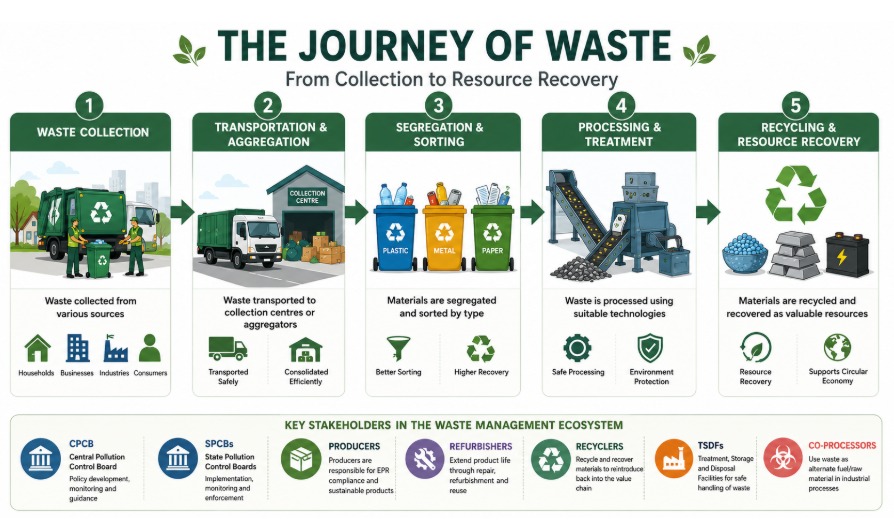
Once waste is generated by households, industries, businesses, institutions, or consumers, it enters a waste management chain involving collection, transportation, segregation, processing, recycling, refurbishment, recovery, or final disposal. The exact pathway depends on the type of waste and applicable environmental regulations. Various stakeholders such as local bodies, collection centres, aggregators, refurbishers, recyclers, waste processors, and authorized facilities participate in this process to ensure that waste is managed in an environmentally sound manner.Why is Proper Waste Management Important?
Proper waste management helps prevent environmental pollution, protects public health, and reduces the burden on landfills and dumpsites. It ensures that waste is collected, transported, processed, and disposed of in a scientifically managed manner instead of being dumped openly or handled through informal channels. It also supports resource conservation by enabling the recovery of valuable materials such as plastics, metals, paper, batteries, and electronic components. Effective waste management forms a key part of India’s circular economy and sustainability objectives.Step 1: Waste Collection
The first stage involves collecting waste from households, commercial establishments, industries, institutions, and consumers. Depending on the waste stream, collection may be carried out by local bodies, authorized collection agencies, collection centres, producers, or waste management companies. Several environmental frameworks encourage source segregation and organized collection systems to improve recycling efficiency and reduce contamination of recyclable materials.Step 2: Transportation and Aggregation
After collection, waste is transported to designated facilities such as collection centres, aggregation points, material recovery facilities, refurbishing units, recyclers, or treatment plants. Transportation is generally carried out using authorized vehicles designed to safely handle different types of waste. Aggregation allows waste from multiple locations to be consolidated before further processing. This improves operational efficiency, reduces transportation costs, and creates economies of scale that make recycling and treatment activities more effective and commercially viable.Step 3: Segregation and Sorting
Segregation and sorting involve separating waste into different categories based on material type, composition, and recycling potential. Materials such as plastics, metals, paper, glass, batteries, electronic components, and other recyclable fractions are identified and sorted for further processing. Proper segregation is critical because mixed or contaminated waste is often more difficult and expensive to recycle. Efficient sorting improves material recovery rates, enhances recycling quality, and ensures that different waste streams are directed to the most appropriate authorized facilities for treatment, refurbishment, or recycling.Step 4: Processing and Treatment
Once sorted, waste undergoes various processing and treatment activities depending on its characteristics and intended end use. These activities may include dismantling, shredding, cleaning, material extraction, composting, co-processing, refurbishment, or specialized treatment methods designed for specific waste streams. The objective of processing is to reduce environmental impacts while maximizing the value that can be recovered from waste materials. Proper treatment also helps ensure that hazardous components are managed safely and that recyclable materials are prepared for reuse in manufacturing and industrial applications.Step 5: Recycling and Resource Recovery
Recycling and resource recovery represent the stage where waste materials are converted into useful products or secondary raw materials. Authorized recyclers process collected waste and recover materials such as plastic granules, recycled metals, recovered battery materials, construction aggregates, and other reusable resources. This stage plays a significant role in reducing dependence on virgin raw materials and supporting sustainable production systems. By returning recovered materials to the manufacturing cycle, recycling helps conserve natural resources, reduce waste disposal requirements, and strengthen circular economy initiatives.How Do Businesses Contribute to the Waste Management Chain?
Businesses play an important role throughout the waste management chain by managing waste responsibly, maintaining compliance records, partnering with authorized recyclers, and fulfilling applicable environmental obligations. Under EPR frameworks, producers may also be required to support collection, recycling, refurbishment, or recovery activities related to the products they place in the market. Many organizations also contribute through sustainable product design, responsible sourcing practices, waste reduction initiatives, and investments in recycling programs. Their participation helps strengthen the overall waste management ecosystem while supporting environmental compliance and sustainability objectives.Conclusion
The journey of waste does not end when it is discarded. Through collection, transportation, segregation, processing, and recycling, waste can be transformed into valuable resources that support environmental sustainability and the circular economy. Businesses play an important role in this process by managing waste responsibly and supporting authorized recycling systems. For organizations seeking assistance with environmental compliance, waste management requirements, and EPR obligations, Axis Consultants provides professional support to help navigate evolving regulatory requirements.Frequently Asked Questions (FAQs)
1. What is the waste management chain?
The waste management chain refers to the complete journey of waste from generation and collection to processing, recycling, recovery, and final disposal. It involves multiple stakeholders working together to ensure environmentally sound waste management.
2. Who are the main stakeholders in the waste management ecosystem?
Key stakeholders include waste generators, collection agencies, local bodies, aggregators, transporters, recyclers, refurbishers, waste processors, producers, and regulatory authorities. Each stakeholder performs a specific role within the waste management chain.
3. How do digital compliance systems support waste tracking?
Digital compliance systems help track waste flows, registrations, recycling activities, reporting requirements, and compliance obligations. They improve transparency and accountability within the waste management ecosystem.
4. Can all waste be recycled?
No. While many materials can be recycled, some waste may require treatment, recovery, co-processing, or safe disposal depending on its composition and contamination levels.
5. What are the biggest challenges in waste management?
Common challenges include poor segregation, inadequate collection infrastructure, illegal dumping, low recycling awareness, and insufficient processing capacity. These issues can reduce overall system efficiency.