Table of Contents
ToggleWhy Are Hilly Areas Environmentally Sensitive?
Hilly regions are home to diverse ecosystems, unique plant species, wildlife habitats, and important water sources. Their fragile landscapes are often more vulnerable to human activities than urban environments because even small disturbances can have long-term environmental impacts. Many hill stations and mountain destinations also serve as catchment areas for rivers and groundwater systems. Protecting these regions is essential not only for biodiversity conservation but also for maintaining ecological balance and water security.Why Should Responsible Tourism Matter?
Tourism provides economic opportunities for local communities and supports regional development. However, irresponsible tourism practices can result in pollution, habitat degradation, waste accumulation, and increased pressure on natural resources. Responsible tourism encourages visitors to minimize their environmental impact while respecting local communities, wildlife, and natural surroundings. Small actions by tourists can collectively make a significant difference in preserving these destinations.Avoid Littering and Leaving Waste Behind
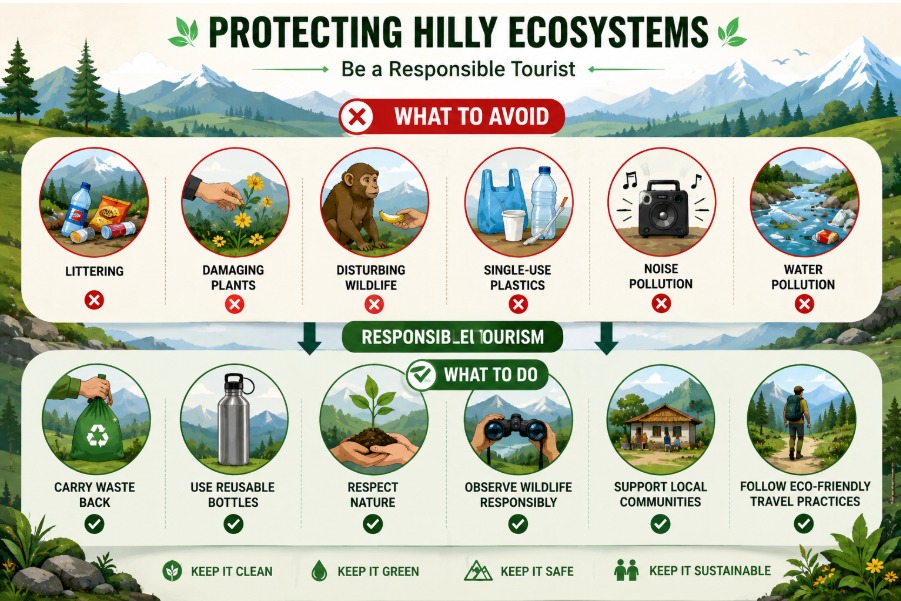
One of the most common environmental issues in hilly areas is littering. Plastic bottles, food packaging, disposable cups, and other waste often accumulate along roadsides, trekking routes, viewpoints, and picnic spots. Tourists should always carry waste back to designated disposal facilities and use available waste bins whenever possible. Proper waste disposal helps maintain the beauty of the landscape and prevents pollution of surrounding ecosystems.Avoid Damaging Local Flora and Wildlife
Many visitors unknowingly harm natural habitats by picking flowers, damaging plants, feeding wildlife, or disturbing animals for photographs. Such actions can disrupt local ecosystems and affect the survival of native species. Tourists should observe wildlife from a safe distance and avoid interfering with natural habitats. Respecting biodiversity helps preserve the ecological integrity of hilly regions for future generations.Avoid Using Single-Use Plastics
Single-use plastics are among the most commonly found pollutants in tourist destinations. Due to limited waste management infrastructure in some hilly regions, plastic waste often remains in the environment for extended periods. Carrying reusable water bottles, bags, and food containers can significantly reduce waste generation. Choosing sustainable alternatives helps keep natural areas clean and reduces environmental pollution.Avoid Creating Noise Pollution
Excessive noise from loud music, vehicle horns, or outdoor activities can disturb both wildlife and local communities. Noise pollution can interfere with animal behavior and negatively affect the peaceful environment that attracts visitors to these destinations. Tourists should maintain reasonable noise levels and respect the tranquility of natural surroundings. Quiet and responsible behavior enhances the experience for everyone while protecting local ecosystems.Avoid Polluting Water Sources
Streams, rivers, lakes, and waterfalls in hilly regions often provide water for local communities and ecosystems. Disposing of waste, washing utensils, or using chemical products near water bodies can contaminate these valuable resources. Tourists should avoid any activities that may pollute water sources and use designated facilities whenever available. Protecting water quality is essential for both environmental and human well-being.How Can Tourists Contribute Positively?
Tourists can contribute positively by carrying reusable products, disposing of waste responsibly, respecting wildlife, supporting local communities, and following environmental guidelines. Small responsible actions help reduce environmental impacts and preserve natural beauty. Participating in eco-friendly tourism practices also encourages sustainable development and helps ensure that future generations can continue to enjoy these unique destinations.Conclusion
Hilly areas are among the most beautiful and environmentally sensitive destinations in the world. Responsible tourism plays a crucial role in protecting these fragile ecosystems from pollution, habitat loss, and environmental degradation. By adopting simple sustainable practices and respecting local environments, tourists can help preserve the natural beauty of hilly regions while supporting sustainable tourism for future generations.Frequently Asked Questions (FAQs)
1. What Are Single-Use Plastics?
Single-use plastics are products designed to be used once and then discarded. Examples include plastic bags, straws, disposable cups, and food packaging.
2. Why Are Hilly Areas Environmentally Sensitive?
Hilly areas contain fragile ecosystems, diverse wildlife, forests, and important water sources. Even small environmental disturbances can have long-term impacts on these regions.
3. How Does Responsible Tourism Benefit the Environment?
Responsible tourism helps reduce pollution, protect natural habitats, and conserve resources. It also supports the long-term preservation of environmentally sensitive destinations.
4. What Are the Risks of Damaging Hilly Areas?
Damage to hilly areas can lead to soil erosion, loss of biodiversity, water pollution, and habitat destruction. It may also increase the risk of landslides and environmental degradation.
5. How Can Tourists Help Protect Hilly Ecosystems?
Tourists can help by avoiding littering, reducing plastic use, respecting wildlife, and following local environmental guidelines. Small responsible actions can significantly reduce environmental impacts.