Table of Contents
ToggleWhat is Public Transportation?
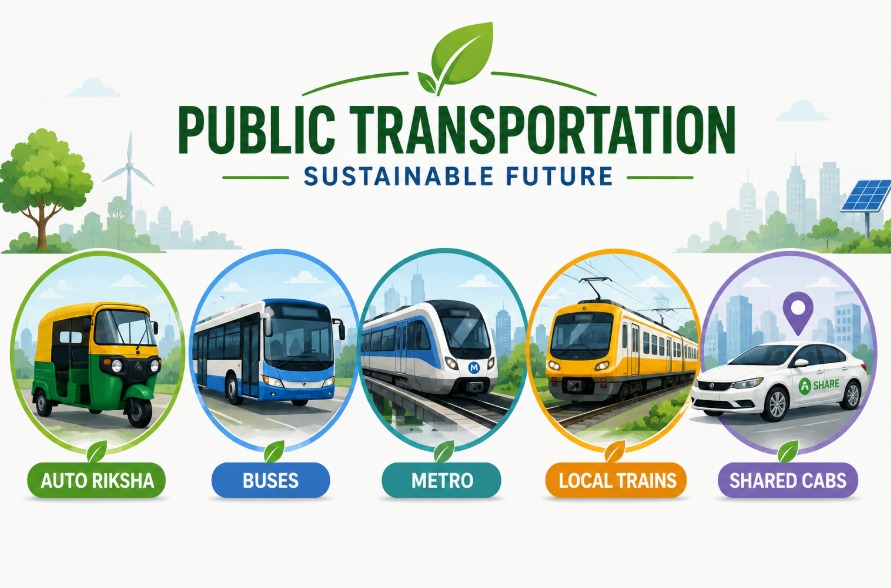
Public transportation refers to shared transport systems that are available for public use, such as buses, metro rail systems, local trains, trams, and other mass transit services. These systems are designed to move large numbers of people efficiently between destinations. Unlike private vehicles, public transport allows multiple passengers to travel together in a single vehicle. This helps reduce the number of vehicles on roads and supports more efficient use of transportation infrastructure.Why is Public Transportation Important?
As cities continue to grow, the demand for transportation increases significantly. Public transportation provides an efficient solution by moving large numbers of people while reducing dependence on private vehicles. It also helps address environmental challenges such as traffic congestion, fuel consumption, air pollution, and greenhouse gas emissions. For many cities, public transport forms a critical component of sustainable urban development.How Does Public Transportation Reduce Air Pollution?
Private vehicles are a major source of air pollutants such as carbon monoxide, nitrogen oxides, and particulate matter. When more people choose public transportation, fewer vehicles are required on the road, leading to lower overall emissions. By reducing the number of individual cars and motorcycles, public transport helps improve air quality and contributes to healthier urban environments. Cleaner air benefits both public health and the environment.How Does Public Transportation Help Reduce Traffic Congestion?
Traffic congestion occurs when too many vehicles use the same road infrastructure. Public transportation reduces congestion by carrying many passengers in a single vehicle instead of requiring each person to use a separate car. A single bus or metro train can replace dozens of private vehicles, reducing traffic volume and improving travel efficiency. Less congestion also means lower fuel consumption and reduced vehicle emissions.How Does Public Transportation Lower Carbon Emissions?
Transportation is one of the largest contributors to greenhouse gas emissions globally. Public transportation generally produces lower emissions per passenger compared to private vehicles because transportation resources are shared among many users. When more people use buses, trains, and metro systems, overall carbon emissions from transportation can be significantly reduced. This supports efforts to mitigate climate change and promote sustainable mobility.How Does Public Transportation Support Energy Conservation?
Public transportation systems are typically more energy-efficient than private vehicles because they transport large numbers of passengers simultaneously. This reduces the amount of fuel or energy required per person traveling. Efficient transportation systems help conserve natural resources and reduce dependence on fossil fuels. Energy conservation also contributes to long-term environmental sustainability and resource security.How Does Public Transportation Improve Urban Sustainability?
Sustainable cities require transportation systems that are efficient, accessible, and environmentally responsible. Public transportation supports these objectives by reducing pollution, conserving energy, and optimizing land use. Well-developed public transport networks also encourage more sustainable urban planning by reducing the need for excessive road expansion and parking infrastructure while improving accessibility for residents.How Can Individuals Contribute by Using Public Transport?
Individuals can support environmental sustainability by choosing public transportation whenever possible. Even occasional use of buses, trains, or metro systems can help reduce traffic congestion and environmental impacts. Combining public transport with walking, cycling, or other sustainable mobility options further reduces emissions and promotes environmentally responsible travel habits.Conclusion
Public transportation plays an important role in creating cleaner, healthier, and more sustainable communities. By reducing air pollution, traffic congestion, carbon emissions, and energy consumption, it offers significant environmental benefits. As cities continue to expand, encouraging greater use of public transportation can support long-term sustainability goals while improving the quality of life for urban populations.Frequently Asked Questions (FAQs)
1. Which Mode of Public Transportation is the Most Environmentally Friendly?
Rail-based transportation systems such as metro trains and electric trains are generally among the most environmentally friendly options because they can transport large numbers of passengers while producing lower emissions per passenger.
2. Can Public Transportation Help Reduce Fuel Consumption?
Yes. Since buses, trains, and metro systems transport many passengers simultaneously, they require less fuel per passenger compared to multiple private vehicles making the same journey.
3. What Environmental Problems Are Caused by Excessive Use of Private Vehicles?
Heavy dependence on private vehicles can contribute to air pollution, greenhouse gas emissions, traffic congestion, excessive fuel consumption, and increased demand for road infrastructure.
4. What Are Carbon Emissions?
Carbon emissions are the release of carbon dioxide (CO₂) and other greenhouse gases into the atmosphere, primarily from activities such as transportation, electricity generation, and industrial processes. These gases contribute to global warming and climate change by trapping heat in the Earth's atmosphere.
5. Can Using Public Transportation Make a Significant Environmental Difference?
Yes. When large numbers of people choose public transportation instead of private vehicles, the cumulative reduction in emissions, fuel consumption, and traffic congestion can have a substantial environmental benefit.