Table of Contents
ToggleWhy Should People Care About Biodiversity?
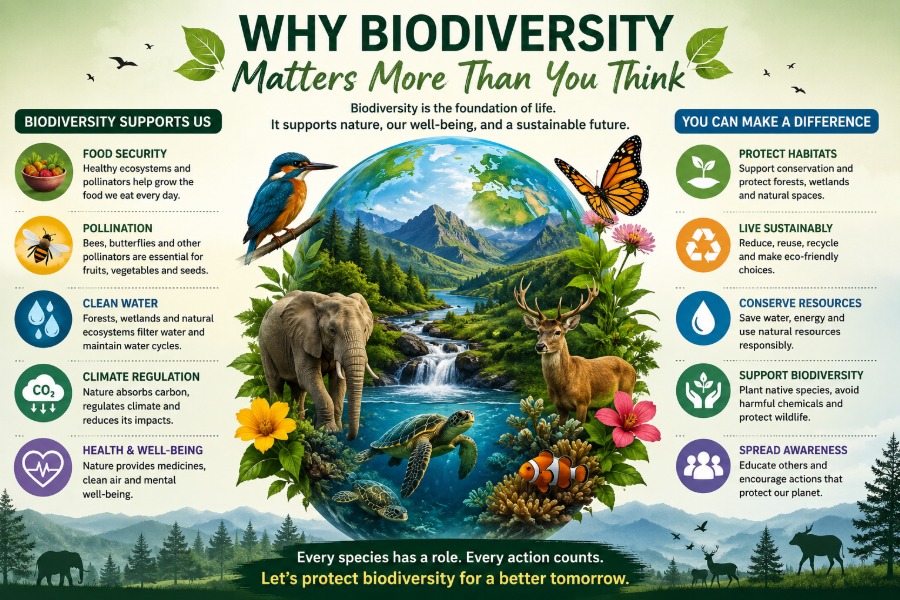
Biodiversity refers to the variety of living organisms on Earth, including plants, animals, insects, fungi, and microorganisms. These species interact with one another and contribute to the functioning of ecosystems that support life. Many of the resources people rely on every day, including food, clean water, medicine, and natural materials, are connected to biodiversity. Healthy ecosystems help maintain environmental balance and provide essential services that support human well-being.How Does Biodiversity Support Our Food Supply?
Agriculture depends heavily on biodiversity. Different plant species, insects, microorganisms, and animals contribute to food production by supporting pollination, soil fertility, pest control, and nutrient cycling. A diverse natural environment helps strengthen food systems and improve resilience against pests, diseases, and changing climate conditions. Biodiversity therefore plays an important role in ensuring long-term food security.Why Are Bees, Butterflies, and Pollinators So Important?
Pollinators such as bees, butterflies, birds, and certain insects help plants reproduce by transferring pollen between flowers. This process is essential for the production of fruits, vegetables, seeds, and many other crops. A significant portion of the world’s food production depends directly or indirectly on pollination. Protecting pollinator populations is therefore important for agriculture, biodiversity, and ecosystem health.What Happens When Species Disappear?
When species become endangered or extinct, ecosystems can become less stable and less resilient. The loss of a single species may affect food chains, ecological relationships, and the availability of resources for other organisms. Species loss can also reduce ecosystem services that humans depend on, including pollination, water purification, and natural pest control. Protecting biodiversity helps maintain healthy and functioning ecosystems.How Does Biodiversity Help Fight Climate Change?
Forests, wetlands, grasslands, and oceans help absorb and store carbon dioxide from the atmosphere. These ecosystems play an important role in regulating the Earth’s climate and reducing the impacts of greenhouse gas emissions. Healthy and diverse ecosystems are often better able to adapt to environmental changes and recover from disturbances. Biodiversity therefore contributes to climate resilience and environmental stability.How Does Biodiversity Protect Water Resources?
Natural ecosystems help maintain water quality by filtering pollutants, reducing soil erosion, and supporting groundwater recharge. Forests, wetlands, and vegetated areas act as natural systems that protect rivers, lakes, and other water bodies. Biodiversity also helps regulate water cycles and supports the availability of freshwater resources. Protecting natural habitats can therefore contribute to improved water security for communities.What Are the Biggest Threats to Biodiversity Today?
Biodiversity faces numerous challenges, including habitat destruction, deforestation, pollution, climate change, invasive species, and unsustainable use of natural resources. Human activities continue to place increasing pressure on ecosystems around the world. As natural habitats decline, many species struggle to survive and reproduce. Addressing these threats requires conservation efforts, sustainable development practices, and greater environmental awareness.What Can Individuals Do to Protect Biodiversity?
Individuals can support biodiversity by reducing waste, conserving natural resources, planting native vegetation, reducing pesticide use, and supporting conservation initiatives. Responsible consumption and sustainable lifestyle choices can also reduce environmental impacts. People can further contribute by participating in community environmental activities, protecting local habitats, and spreading awareness about the importance of biodiversity. Small actions can collectively make a significant difference.Why Does Biodiversity Matter for Future Generations?
Future generations will depend on the same natural systems that support life today. Biodiversity helps provide food, water, clean air, medicines, and other essential resources that contribute to human well-being. Protecting biodiversity today helps ensure that future generations inherit healthy ecosystems capable of supporting sustainable development, environmental stability, and economic growth.Conclusion
Biodiversity is far more important than many people realize. It supports food production, protects water resources, helps regulate climate, and maintains the ecosystems that sustain life on Earth. Every species plays a role in maintaining environmental balance and resilience. As biodiversity continues to face growing threats, collective action from governments, organizations, communities, and individuals becomes increasingly important. By understanding its value and supporting conservation efforts, we can help protect the natural systems that benefit both present and future generations.Frequently Asked Questions (FAQs)
1. What Is Biodiversity?
Biodiversity refers to the variety of living organisms, including plants, animals, insects, fungi, and microorganisms, that exist within ecosystems and interact with one another.
2. Why Is Biodiversity Important for Humans?
Biodiversity supports food production, clean water, medicine, climate regulation, and many ecosystem services that contribute to human health and well-being.
3. What Are Pollinators?
Pollinators are organisms such as bees, butterflies, birds, and insects that help plants reproduce by transferring pollen between flowers.
4. How Does Biodiversity Help Agriculture?
Biodiversity supports pollination, soil health, nutrient cycling, and natural pest control, all of which contribute to agricultural productivity.
5. How Can Individuals Support Biodiversity Conservation?
People can plant native species, reduce waste, conserve resources, support conservation programs, and adopt environmentally responsible habits.