Table of Contents
ToggleWhat Is Pollution?
Pollution refers to the introduction of harmful substances or contaminants into the environment that negatively affect natural ecosystems, human health, and living organisms. These contaminants may be physical, chemical, or biological in nature. Pollution can occur in the air, water, land, and even through excessive noise or artificial light. It is one of the most significant environmental challenges facing the world today and affects both developed and developing countries.Why Is Pollution a Global Concern?
Pollution affects environmental quality, public health, biodiversity, and economic development. Rapid urbanization, industrial growth, population increase, and unsustainable consumption patterns have contributed to rising pollution levels across the globe. The impacts of pollution often extend beyond local boundaries. Contaminated water, poor air quality, and environmental degradation can affect entire regions, making pollution management an important global priority.What Are the Different Types of Pollution?
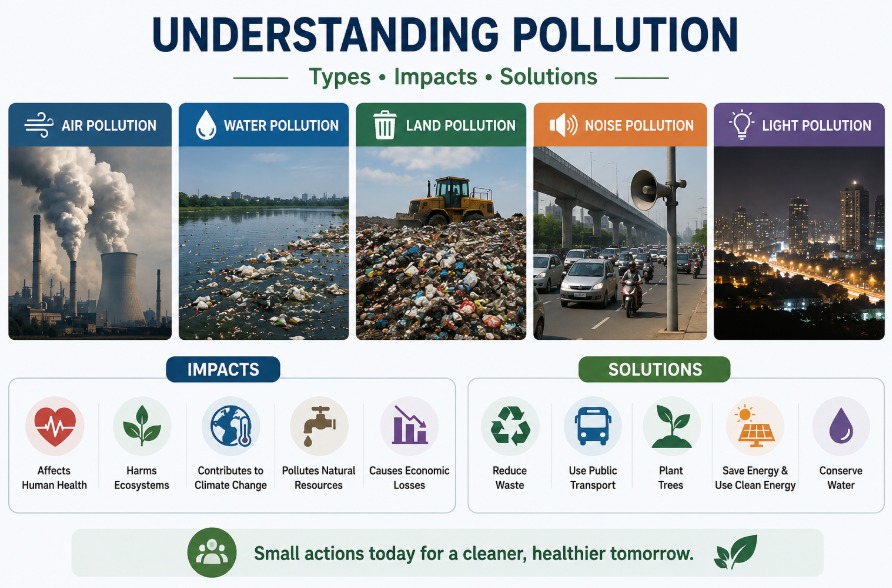
Pollution can be categorized into several types, including air pollution, water pollution, land pollution, noise pollution, and light pollution. Each type affects the environment in different ways and requires specific management approaches. While the sources may vary, many forms of pollution are linked to human activities such as transportation, industrial operations, improper waste disposal, excessive resource consumption, and urban development.How Does Water Pollution Affect Ecosystems?
Water pollution occurs when contaminants such as sewage, industrial effluents, chemicals, plastics, and agricultural runoff enter rivers, lakes, oceans, or groundwater sources. These pollutants can reduce water quality and harm aquatic life. Polluted water bodies often experience reduced biodiversity, disruption of aquatic ecosystems, and declining water availability for human use. Protecting water resources is essential for both environmental sustainability and public health.What Is Land Pollution and Why Does It Matter?
Land pollution results from the improper disposal of waste, littering, industrial activities, mining operations, and excessive use of chemicals. Solid waste, plastic debris, and hazardous materials can accumulate on land and degrade environmental quality. Land pollution can contaminate soil, affect agricultural productivity, and create risks for wildlife and human populations. Effective waste management and responsible disposal practices play a key role in reducing land pollution.How Does Noise Pollution Impact Communities?
Noise pollution refers to excessive or unwanted sound generated by transportation systems, industrial operations, construction activities, and urban environments. While often overlooked, it can significantly affect quality of life. Prolonged exposure to high noise levels may contribute to stress, sleep disturbances, reduced concentration, and other health concerns. Managing noise pollution helps create healthier and more comfortable living environments.What Are the Environmental and Health Impacts of Pollution?
Pollution can have serious consequences for ecosystems, wildlife, and human health. Environmental impacts include habitat degradation, biodiversity loss, contamination of natural resources, and disruption of ecological processes. Human exposure to pollution may contribute to respiratory illnesses, waterborne diseases, cardiovascular problems, and other health issues. Reducing pollution is therefore essential for protecting both environmental and public well-being.How Can Individuals Help Reduce Pollution?
Individuals can contribute by reducing waste generation, practicing waste segregation, conserving energy, using public transportation, minimizing plastic use, and supporting environmentally responsible practices. Small actions can collectively create meaningful environmental benefits. Participating in community clean-up activities, promoting environmental awareness, and adopting sustainable lifestyles can further support pollution prevention efforts. Every individual has a role to play in protecting the environment.Conclusion
Pollution remains one of the most significant environmental challenges affecting ecosystems, public health, and natural resources worldwide. Air, water, land, and noise pollution can all have long-term impacts if not properly managed. Through responsible practices, effective environmental policies, sustainable development, and public awareness, pollution can be reduced. Collective action from governments, businesses, and individuals is essential for creating a cleaner and healthier future.Frequently Asked Questions (FAQs)
1. Which Type of Pollution Is the Most Common?
Air, water, and land pollution are among the most common forms of pollution worldwide. Their prevalence often depends on local environmental and economic conditions.
2. What Is the Main Cause of Pollution?
Human activities such as industrialization, transportation, improper waste disposal, fossil fuel consumption, and urbanization are major contributors to pollution.
3. How Does Pollution Affect Human Health?
Pollution can contribute to respiratory diseases, cardiovascular problems, waterborne illnesses, and other health concerns depending on the type and level of exposure.
4. Why Is Waste Management Important for Pollution Control?
Proper waste management helps prevent littering, land contamination, water pollution, and environmental degradation while supporting recycling and resource recovery.
5. Why Is Pollution Prevention Better Than Cleanup?
Preventing pollution at the source is often more effective and less costly than managing environmental damage after contamination has already occurred.