Table of Contents
ToggleWhy Are Water Parks Important Recreational Spaces?
Water parks provide recreational opportunities for people of all age groups and attract millions of visitors every year. They offer entertainment, relaxation, and social interaction while contributing to local tourism and economic development.
Many modern water parks also invest significant resources in water treatment systems, safety infrastructure, and facility maintenance. Responsible visitor behavior helps ensure these facilities remain clean, safe, and enjoyable for everyone.
Why Does Responsible Visitor Behavior Matter?
Water parks are shared spaces where large numbers of people use the same facilities, attractions, and water resources. Irresponsible behavior can affect water quality, increase waste generation, and create safety risks for other visitors.
Practicing responsible habits helps maintain hygiene standards, reduces environmental impacts, and improves the overall visitor experience. Small actions by individuals can collectively contribute to a cleaner and safer environment.
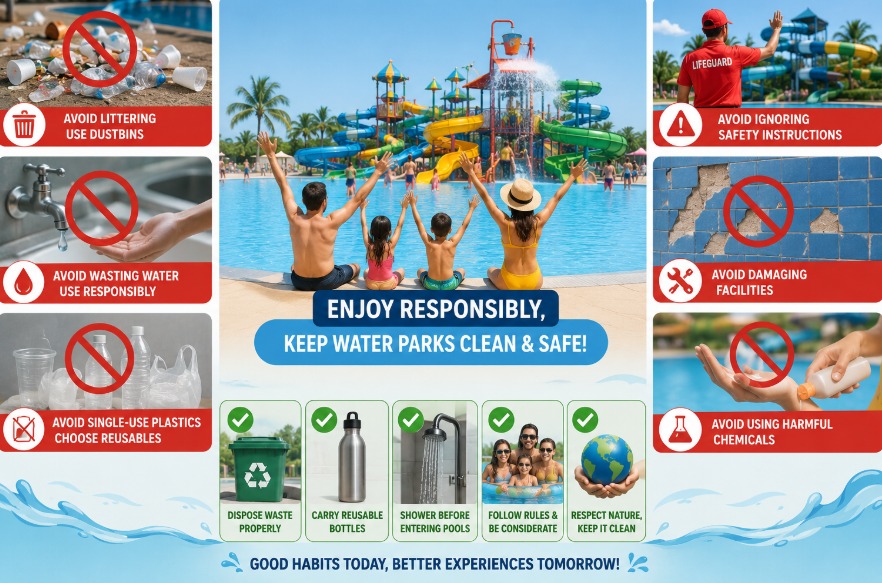
Avoid Littering and Leaving Waste Behind
Food wrappers, plastic bottles, disposable cups, and other litter can quickly accumulate if waste is not disposed of properly. Improperly discarded waste can affect the cleanliness of the park and increase maintenance requirements.
Visitors should always use designated waste bins and avoid leaving any waste near pools, walkways, or recreational areas. Proper waste disposal helps maintain hygiene and creates a better experience for everyone.
Avoid Wasting Water Unnecessarily
Although water parks are designed around water-based attractions, water remains a valuable natural resource. Efficient water management is important for reducing environmental impacts and supporting sustainable operations.
Visitors can contribute by using shower facilities responsibly, avoiding unnecessary water wastage, and following park guidelines related to water use. Responsible water consumption supports long-term resource conservation.
Avoid Bringing Excessive Single-Use Plastics
Single-use plastics such as disposable bottles, packaging materials, and plastic bags contribute significantly to waste generation. If not managed properly, these materials can enter drainage systems and create environmental problems.
Choosing reusable water bottles and minimizing disposable products can help reduce waste generation. Sustainable alternatives support cleaner recreational spaces and lower environmental impacts.
Avoid Ignoring Safety Instructions
Safety rules are established to protect visitors and ensure the proper functioning of attractions. Ignoring height restrictions, warning signs, or operational instructions can increase the risk of accidents and injuries.
Visitors should carefully follow all guidelines provided by the facility and cooperate with staff members. Responsible behavior helps create a safer environment for both guests and employees.
Avoid Damaging Shared Facilities
Water slides, pools, changing rooms, seating areas, and other facilities require continuous maintenance and investment. Intentional damage or misuse can increase repair costs and affect the quality of visitor services.
Respecting shared infrastructure helps maintain the condition of facilities and ensures that future visitors can continue to enjoy them. Proper use of amenities contributes to efficient resource management.
Avoid Using Harmful Chemicals Near Water Attractions
Products such as certain lotions, oils, and other substances may affect water quality if used excessively near pools and attractions. Maintaining water quality requires extensive treatment and monitoring processes.
Following park guidelines regarding approved products and maintaining personal hygiene before entering pools helps support cleaner and safer recreational water environments.
How Can Visitors Contribute Positively?
Visitors can contribute positively by disposing of waste responsibly, conserving water, respecting safety rules, and treating shared facilities with care. These actions help improve the overall experience for everyone.
Choosing reusable products, encouraging responsible behavior among family and friends, and following environmental guidelines can also support more sustainable recreational practices.
Conclusion
Water parks provide valuable recreational experiences while relying on significant water, energy, and infrastructure resources. Responsible visitor behavior plays an important role in maintaining cleanliness, safety, and operational efficiency.
By adopting simple sustainable habits such as reducing waste, conserving water, and respecting shared facilities, visitors can help create cleaner, safer, and more enjoyable water parks for everyone.
Frequently Asked Questions (FAQs)
1. Why Is Water Conservation Important at Water Parks?
Water parks use large volumes of water for attractions and facilities. Responsible water use helps reduce resource consumption and supports sustainable operations.
2. What Are the Most Common Types of Waste Generated at Water Parks?
Plastic bottles, food packaging, disposable cups, tissues, and other visitor-generated waste are among the most common waste streams found at water parks.
3. How Do Water Parks Maintain Water Quality?
Water parks use filtration systems, treatment processes, and regular monitoring to maintain safe and hygienic water conditions for visitors.
4. Can Sustainable Practices Improve Recreational Facilities?
Yes. Sustainable practices help reduce resource consumption, improve operational efficiency, and support long-term environmental goals.
5. Why Are Safety Rules Important at Water Parks?
Safety rules help prevent accidents, protect visitors, and ensure attractions operate safely and effectively.