Table of Contents
ToggleWhat Does Sustainable Living at Home Mean?
Sustainable living at home involves making daily choices that reduce environmental impacts while using resources more efficiently. These choices focus on conserving energy, reducing waste, saving water, and adopting responsible consumption habits. Sustainability does not necessarily require major lifestyle changes. Small actions such as switching off unused appliances, reducing food waste, and choosing reusable products can collectively contribute to environmental protection and resource conservation.Why Are Sustainable Choices Important?
Everyday household activities consume energy, water, and natural resources while generating waste and emissions. As urban populations continue to grow, the cumulative environmental impact of households becomes increasingly significant. Sustainable choices help reduce pressure on natural resources, lower greenhouse gas emissions, decrease waste generation, and support long-term environmental sustainability. They also contribute to cost savings through improved resource efficiency.How Can Households Reduce Energy Consumption?
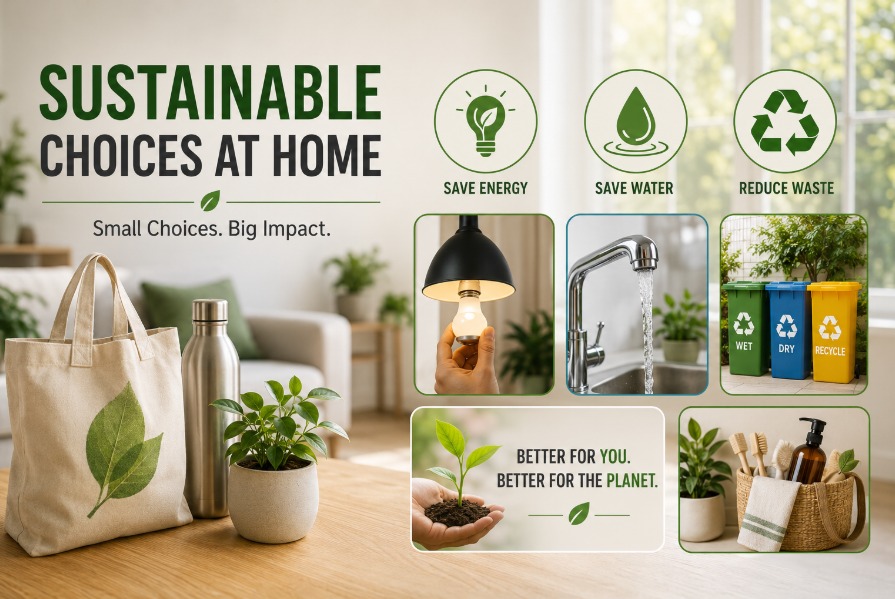
Households can reduce energy consumption by using energy-efficient appliances, switching to LED lighting, unplugging devices when not in use, and optimizing the use of air conditioning and heating systems. Energy-efficient technologies often consume significantly less electricity while delivering similar performance. Simple behavioral changes can also make a difference. Turning off lights in unused rooms, maximizing natural daylight, and maintaining appliances properly can help reduce electricity consumption and lower household energy costs.Why Does Water Conservation Matter?
Freshwater is a limited resource, and increasing demand places pressure on rivers, lakes, reservoirs, and groundwater supplies. Conserving water helps ensure long-term availability while reducing the energy required for water treatment and distribution. Households can conserve water by repairing leaks, using water-efficient fixtures, harvesting rainwater, and avoiding unnecessary water use. Even small reductions in daily water consumption can contribute significantly to overall conservation efforts.How Can Sustainable Waste Management Be Practiced at Home?
Proper waste management begins with segregation at the source. Separating recyclable, organic, and non-recyclable waste improves recycling efficiency and reduces the amount of waste sent to landfills. Households can further support waste reduction by reusing materials, avoiding unnecessary packaging, donating usable items, and participating in local recycling programs. Responsible waste management helps conserve resources and supports circular economy initiatives.Why Is Reducing Single-Use Plastics Important?
Single-use plastics such as bags, bottles, straws, and disposable packaging often have a very short useful life but can remain in the environment for decades. Improper disposal contributes to land, river, and marine pollution. Replacing disposable products with reusable alternatives can significantly reduce waste generation. Reusable bottles, cloth bags, food containers, and metal cutlery are practical alternatives that support more sustainable consumption patterns.How Can Sustainable Purchasing Decisions Make a Difference?
Consumer choices influence production patterns and resource consumption. Purchasing durable, repairable, and environmentally responsible products can help reduce waste and minimize environmental impacts throughout a product’s lifecycle. Supporting businesses that prioritize sustainability, use recycled materials, or adopt responsible manufacturing practices can further encourage environmentally conscious production and consumption.What Role Does Home Composting Play?
A significant portion of household waste consists of biodegradable organic materials such as fruit peels, vegetable scraps, and garden waste. Composting converts this organic waste into nutrient-rich material that can be used to improve soil quality. Home composting reduces the amount of waste sent to landfills while supporting natural nutrient cycles. It also helps lower methane emissions associated with the decomposition of organic waste in landfills.How Can Families Build Sustainable Habits?
Building sustainable habits requires consistency and awareness. Families can start by setting simple goals such as reducing food waste, carrying reusable products, conserving water, and practicing waste segregation. Involving all family members, especially children, helps create long-term behavioral change. Sustainable habits developed at home can contribute to broader environmental awareness and responsible resource use within communities.Conclusion
Sustainable living begins with everyday choices made at home. From conserving water and energy to reducing waste and making responsible purchasing decisions, small actions can collectively create meaningful environmental benefits. By adopting practical and achievable sustainable habits, households can reduce their environmental footprint, conserve valuable resources, and contribute to a cleaner and more sustainable future.Frequently Asked Questions (FAQs)
1. What Is Sustainable Living?
Sustainable living involves making choices that reduce environmental impacts while using resources efficiently. It focuses on balancing current needs with long-term environmental protection.
2. What Is Home Composting?
Home composting is the process of converting organic household waste into nutrient-rich compost that can be used to improve soil quality and support plant growth.
3. Why Is Food Waste a Sustainability Issue?
Food waste results in the unnecessary use of water, energy, land, and other resources involved in food production. It also contributes to waste generation and greenhouse gas emissions.
4. Can Sustainable Choices Save Money?
Yes. Energy-efficient appliances, water conservation measures, waste reduction practices, and reusable products can often reduce long-term household expenses.
5. How Can Children Participate in Sustainable Living?
Children can contribute by practicing waste segregation, conserving water and electricity, reducing food waste, and developing environmentally responsible habits from an early age.