Table of Contents
ToggleWhat is the Urban Water Cycle?
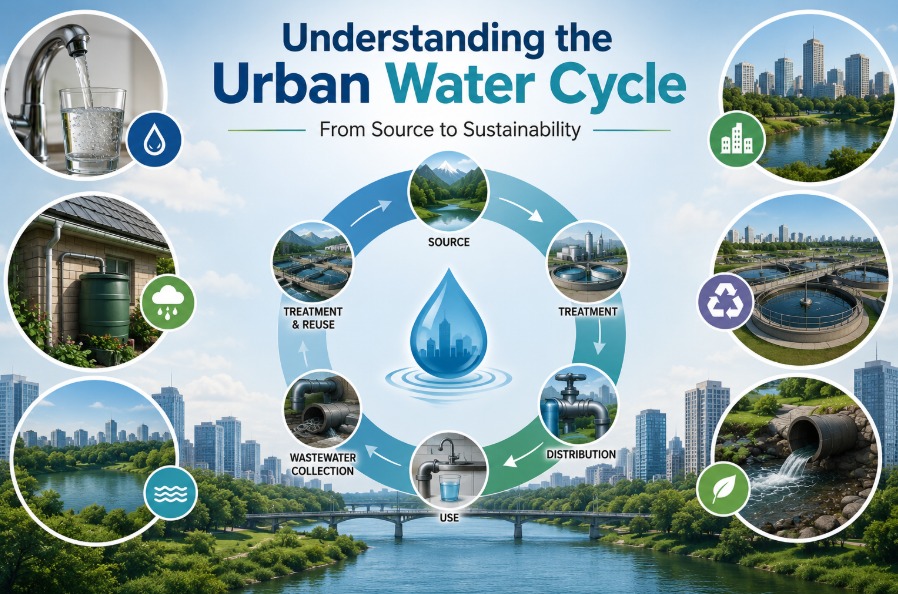
The urban water cycle refers to the movement of water through cities and towns, from its source to consumption and eventually back into the environment. It includes water collection, treatment, distribution, usage, wastewater treatment, and reuse or discharge. Unlike the natural water cycle, the urban water cycle involves human infrastructure such as reservoirs, pipelines, treatment plants, drainage systems, and sewage networks. Efficient management of this cycle is essential to ensure a reliable supply of clean water while minimizing environmental impacts.Where Does Drinking Water Come From?
Drinking water comes from a variety of sources, including rivers, lakes, reservoirs, groundwater aquifers, and in some regions, desalinated seawater. Before reaching consumers, water is treated at specialized facilities to remove impurities and ensure it meets quality standards. As urban populations continue to grow, cities require increasing amounts of water to meet domestic, commercial, and industrial needs. Protecting water sources and maintaining treatment infrastructure are therefore critical components of sustainable urban development.Why Does Groundwater Matter?
Groundwater is one of the most important sources of freshwater worldwide. Stored beneath the Earth’s surface in aquifers, groundwater supplies drinking water to millions of people and supports agriculture, industries, and public water systems. Groundwater also acts as a natural reserve during periods of low rainfall and drought. However, excessive extraction can lower water tables, reduce water availability, and damage ecosystems. Sustainable groundwater management is essential for long-term water security.What Causes Water Scarcity?
Water scarcity occurs when the demand for water exceeds the available supply. Rapid urbanization, population growth, industrial development, climate change, and inefficient water use are some of the major factors contributing to water shortages in many cities. Pollution of rivers, lakes, and groundwater sources further reduces the amount of usable freshwater available. As water resources become increasingly stressed, cities must adopt conservation measures and improve water management practices to ensure future availability.How Does Rainwater Harvesting Help Cities?
Rainwater harvesting involves collecting and storing rainwater from rooftops, open spaces, and other surfaces for future use or groundwater recharge. It helps reduce dependence on municipal water supplies and provides an additional source of water during dry periods. In urban areas, rainwater harvesting can also help reduce flooding by limiting surface runoff. By increasing groundwater recharge and promoting efficient water use, it contributes to more sustainable and resilient urban water systems.Why Do Lakes Need Protection?
Lakes play an important role in the urban water cycle by storing freshwater, supporting biodiversity, regulating local climates, and helping recharge groundwater reserves. They also serve as important recreational and ecological assets for communities. However, many urban lakes face threats from pollution, encroachment, waste disposal, and excessive nutrient loading. Protecting lakes helps maintain water quality, supports wildlife habitats, and strengthens overall water security within cities.How Can Citizens Contribute to Water Conservation?
Individuals play an important role in conserving water resources. Simple actions such as fixing leaks, using water-efficient appliances, reducing unnecessary water consumption, and harvesting rainwater can significantly reduce water demand. Citizens can also help by preventing pollution of water bodies, participating in local conservation initiatives, and supporting sustainable water management practices. Collective efforts can make a substantial difference in protecting urban water resources.The Future of Urban Water Management
As cities continue to expand, urban water management is becoming increasingly important. Future water systems are expected to focus on conservation, wastewater recycling, smart water technologies, groundwater recharge, and integrated water resource management. Many cities are also investing in sustainable infrastructure, nature-based solutions, and digital monitoring systems to improve efficiency and resilience. These approaches will play a vital role in ensuring long-term water security and environmental sustainability.Conclusion
Water is one of the most valuable resources supporting urban life. Understanding the urban water cycle helps highlight the importance of protecting water sources, conserving resources, and adopting sustainable water management practices. From groundwater conservation and lake protection to rainwater harvesting and efficient water use, every stakeholder has a role to play in ensuring water security. Sustainable management of urban water resources is essential for building resilient and environmentally responsible cities.Frequently Asked Questions (FAQs)
1. What Are Simple Ways to Conserve Water at Home?
Fixing leaks, using water-efficient fixtures, turning off taps when not in use, and harvesting rainwater are simple ways to reduce household water consumption.
2. What Causes Water Scarcity in Cities?
Population growth, urbanization, climate change, pollution, and excessive water consumption are among the primary causes of water scarcity in urban areas.
3. What Are Smart Water Management Systems?
Smart water systems use sensors, digital monitoring, and data analytics to improve water distribution, detect leaks, and enhance overall efficiency.
4. How Can Water Pollution Affect Cities?
Water pollution reduces the availability of clean water, harms ecosystems, increases treatment costs, and poses risks to public health and environmental sustainability.
5. Can Treated Wastewater Be Reused?
Yes. Treated wastewater can be reused for landscaping, industrial applications, agriculture, and groundwater recharge, helping reduce demand for freshwater resources.