Table of Contents
ToggleWhat is Solid Waste?
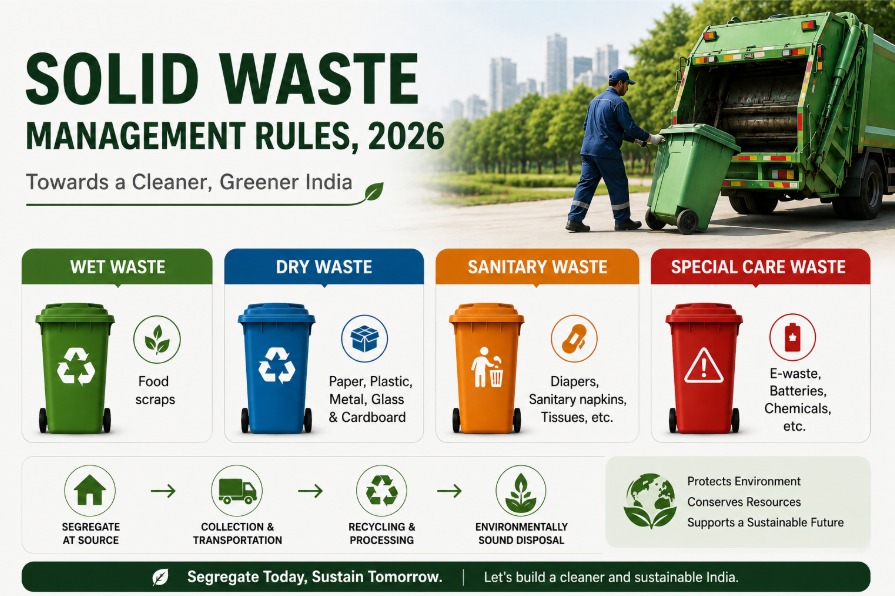
Solid waste refers to discarded materials generated from households, commercial establishments, institutions, public places and other activities. It includes waste such as food scraps, paper, plastic, packaging materials, sanitary waste, garden waste and other non-liquid waste. Proper segregation helps improve recycling, treatment and environmentally sound disposal of waste. Under the Solid Waste Management Rules, 2026, waste is required to be segregated into four streams:- Wet Waste
- Dry Waste
- Sanitary Waste
- Special Care Waste
What are the Solid Waste Management Rules, 2026?
The Solid Waste Management Rules, 2026 have been notified by the Ministry of Environment, Forest and Climate Change (MoEFc & CC) to strengthen waste management systems across urban and rural India. The Rules introduce a comprehensive framework for waste segregation, collection, transportation, processing, recycling, disposal and compliance monitoring. They also establish a Centralised Online Portal for registration, reporting and compliance management of various stakeholders. The Rules promote resource recovery, scientific waste processing and reduction of landfill dependency.Why is Solid Waste Management Important in India?
India generates a significant amount of solid waste every day due to rapid urbanization, population growth and increasing consumption of goods and services. If not managed properly, waste can cause environmental pollution, health hazards and contamination of natural resources. Effective solid waste management helps ensure proper segregation, recycling, processing and disposal of waste. It reduces pollution, conserves resources, supports a circular economy and contributes to cleaner, healthier and more sustainable communities.Key Features of the SWM Rules, 2026
Some important provisions of the Rules include:- Mandatory four-stream segregation at source
- Establishment of a Centralised Online Portal
- Registration of Bulk Waste Generators and processing facilities
- Introduction of Extended Bulk Waste Generator Responsibility (EBWGR)
- Promotion of decentralised waste processing
- Scientific landfill management standards
- Compliance reporting and annual return requirements
- Environmental compensation for non-compliance
Extended Bulk Waste Generator Responsibility (EBWGR)
Extended Bulk Waste Generator Responsibility (EBWGR) is a key compliance mechanism introduced under the Solid Waste Management Rules, 2026. It places responsibility on Bulk Waste Generators (BWGs) to ensure the environmentally sound management of the waste generated by them, particularly wet waste, dry waste, sanitary waste and special care waste. Under this framework, eligible Bulk Waste Generators must register on the Centralised Online Portal, fulfil waste management obligations and maintain compliance records. Existing BWGs that are unable to establish decentralised wet waste processing facilities may obtain exemption from the local body and fulfil their obligations through procurement of EBWGR certificates as prescribed under the Rules.How to Register as a Bulk Waste Generator (BWG)?
Entities qualifying as Bulk Waste Generators under the Solid Waste Management Rules, 2026 are required to register through the Centralised Solid Waste Management (SWM) Portal developed by the Central Pollution Control Board (CPCB). The registration process involves creating an account, selecting the applicable stakeholder category, providing organisational details and submitting the required information and documents through the online portal. Once the application is submitted and approved, the entity receives registration on the portal and becomes responsible for fulfilling the applicable compliance obligations under the Rules, including waste segregation, EBWGR requirements, record maintenance and annual return filing. The portal can be accessed at https://swm.cpcb.gov.in/.Benefits of Proper Solid Waste Management
Proper solid waste management provides significant environmental, social and economic benefits. It helps reduce pollution, prevents contamination of soil and water resources, improves public health and promotes cleaner surroundings. Effective waste segregation and recycling also support the recovery of valuable materials and reduce the burden on landfills. For businesses and communities, proper waste management improves compliance with environmental regulations, enhances sustainability performance and encourages responsible use of resources. It also supports the development of a circular economy by promoting recycling, reuse and resource recovery.Challenges in Solid Waste Management
Despite growing awareness and improved regulations, solid waste management continues to face several challenges in India. Improper segregation of waste at source, limited public awareness and inadequate waste collection infrastructure often affect the efficiency of waste management systems. Many organisations also face difficulties in understanding compliance requirements, maintaining records and implementing proper waste processing practices. In addition, increasing waste generation and dependence on landfills create further challenges for achieving sustainable waste management.Role of Businesses and Bulk Waste Generators
Businesses and Bulk Waste Generators play an important role in implementing the Solid Waste Management Rules, 2026. They are required to register on the Centralised SWM Portal, segregate waste at source into the prescribed categories, ensure proper collection and disposal of waste, and maintain compliance records as required under the Rules. They must also fulfil applicable obligations under Extended Bulk Waste Generator Responsibility (EBWGR), submit annual returns, and ensure that waste is handed over only to authorised waste collectors, recyclers or processing facilities. Compliance with these requirements helps promote environmentally sound waste management and sustainable business practices.Conclusion
The Solid Waste Management Rules, 2026 play an important role in improving waste management practices in India by promoting waste segregation, recycling, resource recovery and environmentally sound disposal. The Rules encourage greater accountability among waste generators and support the development of a cleaner, more sustainable environment. Proper compliance with the Solid Waste Management Rules, 2026 helps organisations fulfil their regulatory obligations, improve sustainability performance and contribute towards responsible waste management practices. It also supports environmental protection and reduces the burden on landfills and natural resources. For organisations seeking professional support under the Solid Waste Management Rules, 2026, Axis Consultants provides assistance with registration, documentation, compliance management, annual return filing, EBWGR compliance and overall regulatory support.Frequently Asked Questions (FAQs)
1. What is a Bulk Waste Generator (BWG)?
A Bulk Waste Generator is an eligible entity falling under the Institutional, Commercial or Residential category and meeting prescribed criteria related to built-up area, water consumption or waste generation under the SWM Rules, 2026.
2. How can a Bulk Waste Generator obtain registration under the SWM Rules, 2026?
Eligible Bulk Waste Generators (BWGs) must register through the CPCB's Centralised SWM Portal by submitting the required details and documents. Once registered, they are required to comply with applicable obligations under the Solid Waste Management Rules, 2026.
3. Is waste segregation mandatory under the SWM Rules, 2026?
Yes. The Rules require segregation of waste into wet waste, dry waste, sanitary waste and special care waste at source.
4. What is the Centralised SWM Portal?
The Centralised SWM Portal is a CPCB-managed digital platform for registration, compliance reporting, return filing and monitoring under the SWM Rules, 2026.
5. What happens in case of non-compliance?
Non-compliance may attract environmental compensation and other regulatory actions as prescribed under the Rules.