Table of Contents
Toggle1. What is E-Waste?
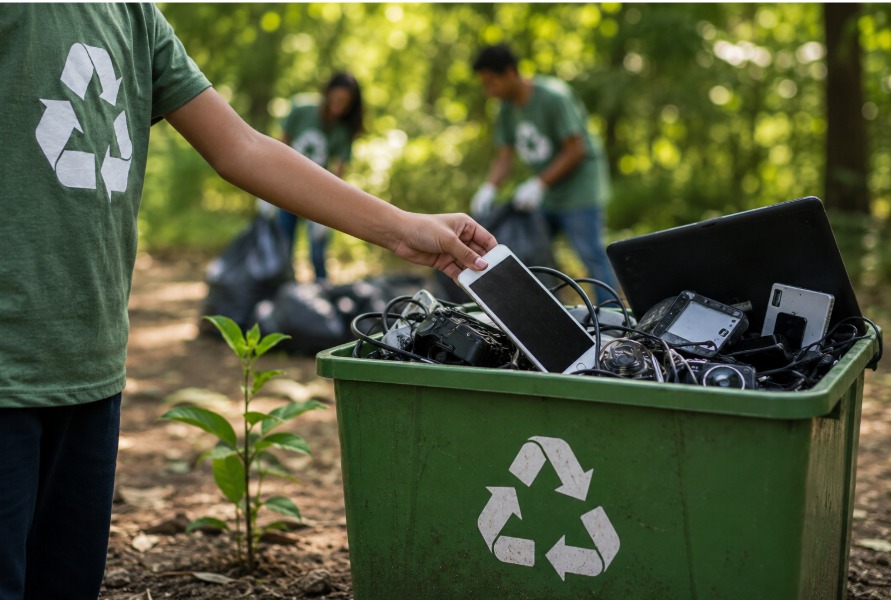
Today, electronic items like mobile phones, laptops, televisions, chargers, batteries, and home appliances are used everywhere. But when these products stop working or become old, they turn into e-waste. E-waste means old, broken, or unwanted electrical and electronic equipment.E-waste means discarded electrical and electronic equipment.
These products contain useful materials like copper, aluminium, and plastic that can be recovered through recycling. At the same time, they may also contain harmful substances that can damage the environment if they are not handled properly.
2. What is EPR?
Extended Producer Responsibility (EPR) is a system in which producers and importers of electronic products are responsible for managing the waste created from their products.
Under EPR:
- Producers must register on the CPCB portal
- Recycling targets are given to companies
- E-waste must be sent to authorised recyclers
- Proper records and returns must be maintained
EPR encourages businesses to become more environmentally responsible and supports sustainable waste management practices.
3. Why is E-Waste Management Important in India?
India is one of the largest users of electronic products.With the fast growth of technology, e-waste is increasing rapidly in India. Proper management of e-waste is important to protect the environment, save resources, and support sustainable development.
Proper e-waste management helps:
- Reduce pollution
- Protect soil and water
- Save natural resources
- Promote recycling and reuse
- Create a cleaner environment
It also supports a circular economy where materials are reused instead of wasted.
4. Rules and Regulations in India
To manage electronic waste properly, the Government of India introduced the E-Waste (Management) Rules, 2022. These rules focus on safe recycling, EPR compliance, environmentally sound disposal, and proper management of electronic waste.
The Central Pollution Control Board (CPCB) manages the online portal for registrations, EPR certificates, and compliance reporting.
Other related environmental regulations include the Battery Waste Management Rules, Plastic Waste Management Rules, and CPCB guidelines related to recycling and waste handling.
5. Benefits of Proper E-Waste Management
Proper e-waste management provides many environmental and business benefits. Recycling helps recover valuable materials such as metals and plastics, reducing the need for raw material extraction. It also lowers pollution and decreases the amount of waste sent to landfills.
For businesses, proper compliance improves sustainability performance, supports environmental goals, and builds a responsible brand image. It also helps companies follow government regulations more effectively.
Refurbishing and reuse of electronic products further help in extending product life and reducing waste generation.
6. Challenges in E-Waste Management
Despite growing awareness, e-waste management still faces many challenges in India. A large amount of e-waste is handled by the informal sector using unsafe methods. Many consumers are also unaware of authorised recycling systems and proper disposal methods.
Collection, transportation, and segregation of e-waste can also be difficult in some areas. In addition, many businesses face challenges in understanding EPR obligations and compliance procedures.
7. Role of Businesses and Industries
Businesses and industries play a major role in managing e-waste responsibly. Producers and importers must fulfil EPR obligations, maintain records, and ensure proper recycling of electronic waste.
Recyclers and refurbishers help recover useful materials and support sustainable waste management. Bulk consumers such as companies, offices, institutions, and industries must ensure that their e-waste is handed over only to authorised entities.
Environmental consultants also assist businesses with registrations, compliance, documentation, and coordination with authorised recyclers.
8. Future of E-Waste Management
The future of e-waste management in India is moving towards better recycling systems, stronger environmental compliance, and increased sustainability awareness. More businesses are now focusing on circular economy practices, recycling, reuse, and environmentally responsible operations.
With growing awareness and government support, India is gradually building a more organised and sustainable e-waste management system.
9. Conclusion
E-waste management and EPR are important for protecting the environment and promoting sustainable development. Proper collection, recycling, reuse, and disposal of electronic waste help reduce pollution and conserve valuable resources.
The E-Waste (Management) Rules, 2022 provide a structured framework for responsible waste management and environmental compliance. Businesses, recyclers, producers, and consumers all have an important role in building a cleaner and more sustainable future.
10. FAQs
1. Why is EPR important for businesses?
EPR makes producers and importers responsible for the waste generated from their products. It encourages companies to support authorised recycling systems, improve sustainability practices, and follow environmental compliance requirements.
2. What are the E-Waste Management Rules, 2022?
The E-Waste (Management) Rules, 2022 are Indian environmental regulations introduced to ensure proper collection, recycling, refurbishing, and disposal of e-waste. These rules define the responsibilities of different stakeholders such as producers, manufacturers, recyclers, refurbishers, bulk consumers, and dismantlers, while also promoting EPR compliance and environmentally sound waste management practices.
3. How does proper e-waste recycling help the environment?
Proper recycling helps recover useful materials from electronic products and reduces the need for dumping waste in landfills. It also prevents harmful chemicals and toxic substances from polluting the air, soil, and water.
4. How can companies improve their e-waste management practices?
Companies can improve e-waste management by maintaining proper records, working with authorised recyclers, following EPR compliance requirements, and creating awareness about responsible recycling and disposal practices.
5. What can happen if e-waste is not managed properly?
Improper disposal or unsafe recycling of e-waste can release harmful substances into the environment, causing air, water, and soil pollution. It may also create serious health risks for workers and nearby communities. In addition, businesses that fail to comply with e-waste management and EPR regulations may face penalties, environmental compensation charges, cancellation of registrations, and other regulatory actions under applicable environmental laws.