Table of Contents
Toggle1. What are the 3Rs of Waste Management?
The 3Rs of waste management refer to Reduce, Reuse, and Recycle. These practices are considered the foundation of sustainable waste management and environmental protection. The main objective of the 3Rs is to minimize waste generation, conserve natural resources, and reduce environmental pollution.
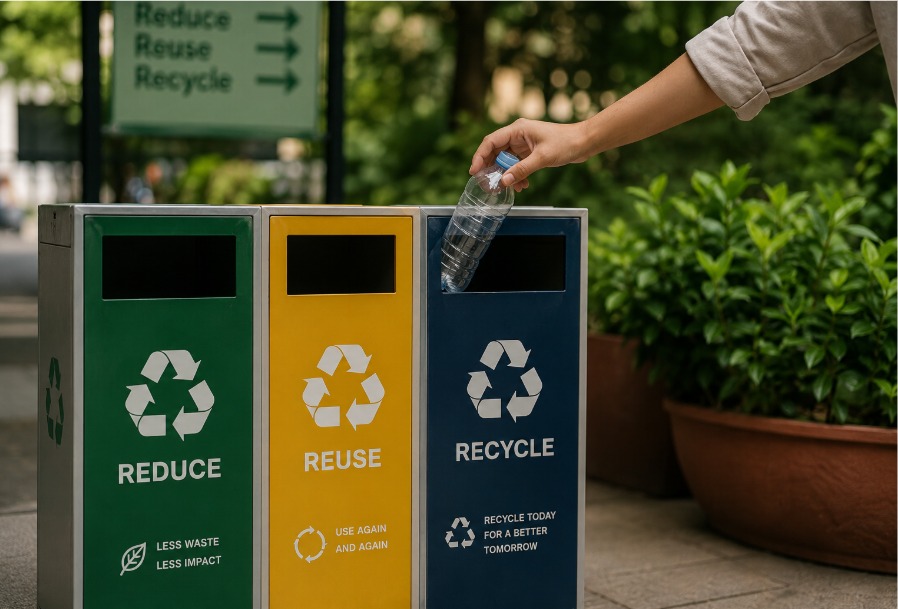
Reduce means limiting unnecessary consumption and minimizing waste generation at the source. Reuse refers to using products and materials again instead of immediately discarding them. Recycle involves processing waste materials into reusable products that can be used again in manufacturing and production processes.
The concept of the 3Rs is widely used by industries, businesses, producers, and households to improve waste management systems and support sustainability initiatives.
2. Importance of Waste Segregation in Waste Management
Waste segregation plays an important role in effective waste management and recycling systems. It refers to separating waste into different categories such as dry waste, wet waste, recyclable waste, plastic waste, hazardous waste, and e-waste.
Proper segregation helps improve recycling efficiency because recyclable materials can be processed separately without contamination. When waste is not segregated properly, recyclable materials often get mixed with other waste, making recycling difficult and increasing landfill waste.
Waste segregation also supports safer disposal methods, improves resource recovery, and reduces environmental pollution. Businesses and industries are increasingly adopting waste segregation systems to strengthen sustainability practices and improve waste handling processes.
- Why are the 3Rs Important for Sustainable Development?
The increasing generation of waste due to industrialization, urbanization, and growing consumption has made sustainable waste management more important than ever. The 3Rs help reduce pressure on natural resources and minimize environmental damage by encouraging responsible consumption and waste reduction practices.
These practices also support sustainable development by conserving energy, reducing pollution, and promoting efficient use of materials. Recycling and reuse reduce the need for excessive extraction of raw materials, while reducing waste generation helps minimize landfill usage. The 3Rs therefore contribute toward building cleaner and more sustainable communities and industries.
4. How Do the 3Rs Help Businesses and Producers?
Businesses, producers, manufacturers, and importers generate large amounts of waste through packaging materials, production processes, and operational activities. Adopting reduce, reuse, and recycle practices helps companies improve waste management efficiency and reduce unnecessary resource consumption. Sustainable waste management practices also help organizations lower waste disposal costs and improve operational performance.
The growing focus on sustainability and environmental responsibility has increased the importance of green business practices. Companies that actively support recycling and environmentally responsible operations are often able to strengthen their corporate image and improve brand reputation. The 3Rs also help businesses align with environmental compliance requirements and support long-term sustainability goals.
5. Role of Producers in Waste Management and Recycling
Producers and manufacturers play an important role in waste generation and resource utilization. Industries dealing with packaging materials, electronics, batteries, plastics, and other products are increasingly expected to adopt environmentally responsible waste management systems. Responsible production and waste management practices help reduce environmental impact and improve recycling efficiency.
Businesses can support sustainable waste management by reducing excessive packaging, encouraging reuse, improving recycling systems, and working with authorized recyclers. Many organizations are also adopting sustainable packaging solutions and resource-efficient production methods to support environmental sustainability and reduce waste generation across operations.
6. What is the Connection Between EPR and the 3Rs?
Extended Producer Responsibility (EPR) and the 3Rs – Reduce, Reuse, and Recycle – are connected because both help in proper waste management and environmental protection. EPR means that producers, manufacturers, and companies are responsible for managing the waste created from their products and packaging materials. The main aim of EPR is to reduce waste and encourage recycling and sustainable practices.
EPR supports the 3Rs by helping businesses reduce unnecessary waste, reuse materials, and recycle products properly. It also improves waste collection, segregation, and recycling systems. Together, EPR and the 3Rs help reduce pollution, save natural resources, and support a cleaner and more sustainable environment.
7. Rules and Regulations Related to Waste Management in India
The Government of India has introduced several environmental regulations and waste management rules to improve recycling systems and promote responsible waste disposal practices. These regulations encourage industries, businesses, and producers to adopt sustainable waste management methods and improve environmental protection.
Important regulations include the Plastic Waste Management Rules, E-Waste Management Rules, Battery Waste Management Rules, and Solid Waste Management Rules. The Central Pollution Control Board (CPCB) regulates waste management activities in India and promotes environmentally safe collection, segregation, recycling, and disposal systems across industries and communities.
8. Role of the 3Rs in Circular Economy
A circular economy focuses on minimizing waste generation and keeping materials in use for as long as possible. The principles of reduce, reuse, and recycle are essential for supporting circular economy systems because they encourage efficient resource utilization and sustainable production methods.
Instead of following a traditional “use and dispose” model, circular economy practices promote recycling, refurbishment, reuse, and resource recovery. Businesses adopting circular economy practices can improve operational efficiency, reduce environmental impact, and strengthen long-term sustainability initiatives while supporting responsible waste management systems.
9. Conclusion
Reduce, Reuse, and Recycle are essential components of sustainable waste management and environmental protection. These practices help reduce pollution, conserve natural resources, improve recycling systems, and support responsible waste disposal methods.
Proper waste segregation, recycling, and sustainable resource management practices are becoming increasingly important for businesses, industries, producers, and consumers. The growing focus on sustainability and environmental compliance has further increased the importance of adopting environmentally responsible waste management systems.
The 3Rs not only help protect the environment but also support long-term sustainability, resource conservation, and responsible business practices.
10. Frequently Asked Questions (FAQs)
1.How can individuals follow the 3Rs in daily life?
Type your paragraph here
Why is waste segregation important ?
Waste segregation improves recycling efficiency, supports proper disposal methods, and helps reduce landfill waste and environmental pollution.
What is the role of EPR in waste management ?
EPR encourages producers to take responsibility for waste generated from their products and supports sustainable waste management systems. Furthermore, EPR helps improve recycling systems, promotes responsible waste management, and encourages businesses to reduce waste and use recyclable materials.
What is a circular economy ?
A circular economy is a system where resources are reused, recycled, and kept in use for as long as possible to reduce waste generation and support sustainability.
How can businesses follow EPR compliance ?
Businesses can follow EPR compliance by registering on the CPCB portal, maintaining proper waste records, working with authorized recyclers, and ensuring proper collection, segregation, recycling, and disposal of waste materials according to environmental guidelines.