
1.What is Battery Waste Management Rules, 2022 ?
Battery Waste Management is a regulatory framework for the safe collection, recycling, refurbishment, and disposal of used batteries, including portable, automotive, industrial, and EV batteries. Introduced under the Battery Waste Management Rules, 2022 by the Ministry of Environment, Forest and Climate Change (MoEFCC), the framework aims to reduce environmental pollution, recover valuable materials, and promote a circular and sustainable economy.
The system is based on Extended Producer Responsibility (EPR), under which producers and importers are responsible for managing the waste generated from the batteries they place in the market. Producers must meet prescribed collection and recycling targets and ensure waste batteries are sent to authorized recyclers or refurbishers. Compliance is monitored through the CPCB online portal, where registered recyclers generate EPR certificates based on actual recycling and material recovery.
2. Why EPR Compliance is Important for Producers and Businesses?
Producers and businesses generate waste through packaging materials, manufacturing activities, and product usage. EPR compliance helps companies manage this waste responsibly by encouraging proper recycling, collection, and disposal systems. It helps businesses reduce environmental pollution and improve waste management practices.
EPR compliance also helps businesses follow government waste management rules and environmental regulations. Companies that follow proper EPR systems show responsibility towards environmental protection and sustainable business practices. This helps businesses improve their operational systems and support long-term environmental sustainability.
- How EPR Compliance Improves Business Reputation?
Businesses that support sustainability and environmental protection are often viewed more positively by customers and society. EPR compliance helps companies build a responsible and environmentally friendly image by showing their commitment towards proper waste management and recycling systems.
Companies following sustainable practices are also able to improve customer trust and strengthen their market reputation. Many consumers today prefer environmentally responsible brands, and businesses that follow EPR compliance can gain a competitive advantage by supporting recycling and sustainability initiatives.
4. What is the Process of EPR Compliance?
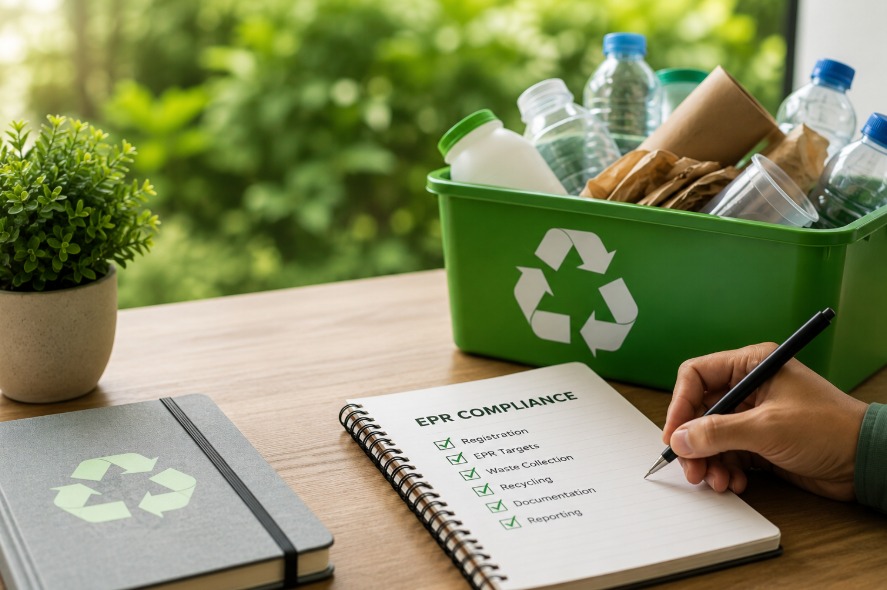
The process of EPR compliance starts with registration on the CPCB portal under the applicable waste management rules. Businesses are required to submit company details, product information, sales data, and necessary documents during the registration process.
After registration, producers and businesses must fulfill their EPR targets, follow waste management guidelines, maintain proper waste records, and work with authorized recyclers for collection, recycling, and safe disposal of waste materials. Companies are also responsible for following environmental responsibilities and submitting required compliance reports according to government regulations.
5. Role of Authorized Recyclers in EPR Systems
Authorized recyclers play an important role in EPR systems because they help businesses recycle and dispose of waste materials safely and responsibly. Working with authorized recyclers ensures that waste is managed according to environmental rules and recycling standards.
Authorized recycling systems also help improve recycling efficiency and reduce environmental damage caused by improper waste disposal. Businesses that work with certified recyclers are better able to follow environmental guidelines and support responsible waste management practices.
6. What are the Roles and Responsibilities of Different Stakeholders under EPR?
Under EPR systems, different stakeholders such as producers, manufacturers, importers, recyclers, refurbishers, collection centers, consumers, and local authorities have their own responsibilities in proper waste management and recycling processes.Under different waste management rules, the roles and responsibilities of stakeholders may vary depending on the type of waste being managed.
Producers are generally responsible for supporting collection, recycling, and environmentally safe disposal of waste generated from their products. Recyclers and refurbishers are responsible for proper processing and recovery of materials, while local bodies and collection centers support waste collection, segregation, transportation, and monitoring activities according to the applicable environmental guidelines and waste management requirements.
7. What are EPR Targets and EPR Certificates?
EPR targets are one of the main responsibilities that producers, manufacturers, and businesses are required to fulfill under EPR compliance systems. These targets are based on the quantity of products or packaging materials introduced into the market and help ensure proper collection, recycling, refurbishment, and environmentally safe disposal of waste materials according to applicable waste management rules.
EPR certificates are generated when waste materials are properly recycled or processed through authorized recyclers and waste management systems. These certificates help businesses demonstrate fulfillment of their responsibilities and assigned EPR targets. The mechanism, calculation process, and compliance structure are determined according to the applicable waste management framework and environmental guidelines.
8. What are the consequences of not following EPR compliance?
Failure to follow EPR compliance may lead to environmental penalties, notices, suspension or cancellation of registration, and other regulatory actions according to applicable waste management rules. Non-compliance may also affect a company’s environmental responsibility goals and overall business reputation.
In some cases, businesses may receive partial adjustment on environmental compensation if they later complete their pending recycling targets within the allowed time period. However, payment of compensation does not remove their responsibility to fulfill pending EPR obligations, and unfulfilled targets may be carried forward to the following year according to applicable compliance guidelines.
9. Conclusion
EPR compliance is becoming an important part of responsible business operations and modern waste management systems. It encourages businesses, producers, recyclers, and other stakeholders to work together towards better recycling practices, proper waste handling, and environmentally responsible operations.
Effective implementation of EPR systems can help improve recycling infrastructure, strengthen environmental accountability, and support a cleaner and more sustainable future.
For businesses seeking reliable support for EPR compliance and waste management services, Axis Consultants provides professional assistance with registration processes, documentation, compliance management, recycling coordination, and environmental regulatory support across different waste management frameworks.