Table of Contents
Toggle1.What are Digital EPR Portals?
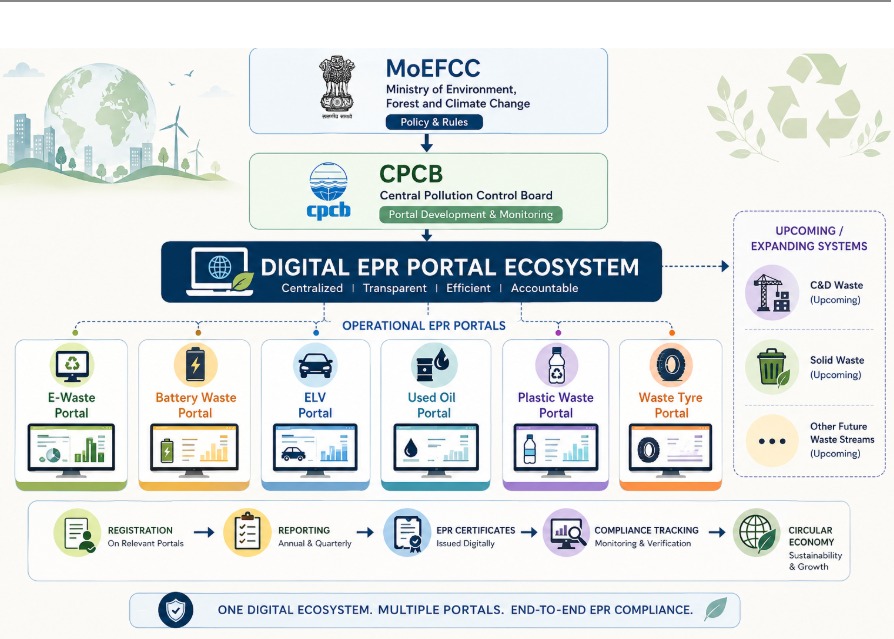
Digital Extended Producer Responsibility (EPR) portals are centralized online compliance systems established by the Central Pollution Control Board (CPCB) for registration, reporting, compliance tracking, return filing, and monitoring of waste management and EPR-related activities under different environmental frameworks. These portals act as single-point digital systems for producers, importers, manufacturers, recyclers, refurbishers, collection centers, and other stakeholders involved in waste management systems. Digital EPR portals also support record maintenance, online submission of annual and quarterly returns, generation of digital EPR certificates, tracking of recycling activities, compliance verification, and monitoring of assigned responsibilities and recycling targets according to applicable waste management rules and environmental guidelines.2. Role of CPCB in Digital EPR Portals
The Central Pollution Control Board (CPCB) manages centralized digital EPR portals used for registration, compliance tracking, reporting, return filing, record maintenance, and digital EPR certificate systems under different waste management frameworks. These portals help monitor activities of producers, recyclers, refurbishers, collection centers, and other stakeholders involved in waste management systems. CPCB also uses these digital systems for audits, inspections, compliance verification, target monitoring, and maintaining transparency within EPR and recycling systems. The portal helps improve organized tracking of recycling activities, reporting processes, and environmentally responsible compliance management practices. 3.Registration Process on EPR Portals Different stakeholders such as producers, importers, manufacturers, recyclers, refurbishers, and collection centers are generally required to register on applicable EPR portals according to different waste management rules and environmental frameworks. The registration process and compliance requirements may vary depending on the type of waste management system and stakeholder category. Some commonly required documents during registration may include company registration documents, GST certificate, PAN card, authorized person details, Consent to Operate (CTO), facility information, recycling unit details, geo-tagged images, machinery details, and other compliance-related documents according to applicable environmental guidelines.4. Role of Digital EPR Certificates
Digital EPR certificates act as proof of fulfillment of EPR responsibilities and assigned targets for producers and businesses under different waste management frameworks. These certificates are generated through verified recycling activities carried out by authorized recyclers on centralized CPCB portals and help producers demonstrate successful completion of their mandatory waste management and recycling obligations. Digital EPR certificates also support transparency, compliance tracking, recycling verification, and organized monitoring of waste management activities. They help maintain proper digital records related to recycling targets, compliance responsibilities, and environmentally responsible recycling practices under applicable environmental guidelines.5. Annual and Quarterly Reporting Systems
Annual and quarterly reporting systems help producers, recyclers, refurbishers, and other stakeholders maintain and submit information related to waste collection, recycling activities, processing quantity, EPR certificates, and fulfillment of assigned compliance responsibilities under different waste management frameworks. These reporting systems support transparency, compliance monitoring, digital record maintenance, and verification of recycling and waste management activities according to applicable environmental guidelines and reporting requirements.6. How do environmental compensation and compliance monitoring systems work ?
Digital EPR systems use compliance monitoring mechanisms such as audits, inspections, geo-tagging, digital verification, and record tracking to identify non-compliance, incorrect reporting, or violation of environmental guidelines under different waste management frameworks. In cases of non-compliance, environmental authorities may impose Environmental Compensation (EC), penalties, suspension of registration, or other regulatory actions according to applicable waste management rules and compliance monitoring systems.7. Benefits of Digital Compliance Systems
Digital compliance systems help improve transparency, monitoring, record maintenance, and accountability within waste management and EPR frameworks. Centralized online portals established by the CPCB help businesses, recyclers, producers, and other stakeholders manage registration, reporting, compliance tracking, and digital EPR certificate activities through organized online systems. These digital systems also help authorities conduct easier audits, maintain permanent compliance records, track recycling activities in real time, and identify non-compliance or target shortfalls more efficiently. Digital compliance mechanisms improve reporting accuracy, simplify compliance processes, reduce paperwork, and support better coordination between different stakeholders involved in waste management and recycling systems.8. Challenges in Digital EPR Systems
Digital EPR systems may face challenges such as technical issues, incorrect data submission, portal-related operational difficulties, lack of awareness among stakeholders, and delays in compliance reporting processes. Managing large-scale waste management data and maintaining accurate records can also become difficult for businesses and recyclers. Digital systems may also face challenges related to verification, coordination between different stakeholders, internet accessibility, and monitoring of real-time recycling activities. Proper training, accurate reporting, and regular system updates are important for improving the efficiency and reliability of digital compliance systems.9. Conclusion
Digital EPR portals have become an important part of modern waste management and compliance systems by improving registration, reporting, compliance tracking, recycling verification, and monitoring activities under different environmental frameworks. These systems help improve transparency, accountability, digital record maintenance, and organized monitoring of waste management operations. For businesses seeking support for EPR portal registration, compliance documentation, reporting processes, and waste management compliance services, Axis Consultants provides professional assistance with registration, documentation, compliance management, and regulatory support under different waste management frameworks.10. Frequently Asked Questions (FAQs)
1. Who is required to register on this digital portal?
All key stakeholders in the waste management lifecycle must register on the portal, primarily Producers (which includes manufacturers and importers), Recyclers, and Refurbishers
2. What information is required to create an account (Sign-up)?
To create an account, businesses must provide their basic company details including their Trade Name, GST Number, PAN, Company Identification Number (CIN), and registered address. They must also provide the name, designation, mobile number, Aadhaar, and PAN of the specific Authorised Person managing the account
3. How are digital EPR Certificates actually generated?
Certificates are not generated manually, they are automatically generated by the CPCB through the online portal. The system calculates the certificate value using a built-in mathematical formula based on the exact dry weight of materials the Recycler or Refurbisher logs as successfully processed
4. What happens if an entity misses a mandatory portal filing deadline?
The portal enforces strict deadlines. If a Producer misses their annual return deadline or a Recycler fails to file their quarterly return within 30 days of the quarter ending, the portal automatically levies an Environmental Compensation (EC) fine categorized under "Return not Filed"
5. Does the portal provide help guides for using the digital system?
Yes, the portal functions as a single-point repository and features an "Information Center" on the dashboard. Users can instantly access and download PDF copies of the portal's Standard Operating Procedures (SOPs), Instruction Sheets, and technical guidance manuals directly from this section