Table of Contents
Toggle1.What is Recycling?
Recycling is the process of collecting, processing, and converting waste materials into reusable products or raw materials. It helps reduce waste generation and supports proper utilization of resources instead of disposing materials in landfills or open environments.
Recycling plays an important role in environmental sustainability by helping conserve natural resources, reduce pollution, save energy, and support responsible waste management practices. Materials such as plastic, paper, metal, glass, batteries, and electronic waste can be recycled through proper collection and recycling systems.
2. Importance of Recycling in Environmental Sustainability
Recycling plays an important role in environmental sustainability by helping reduce waste generation and minimizing environmental pollution. Proper recycling systems help recover useful materials from waste and reduce the amount of waste sent to landfills and dumping areas.
Recycling also helps conserve natural resources, reduce energy consumption, and support responsible waste management practices. By encouraging reuse of materials and proper resource recovery, recycling supports cleaner surroundings, environmental protection, and long-term sustainability.
3. Role of Authorized Recyclers
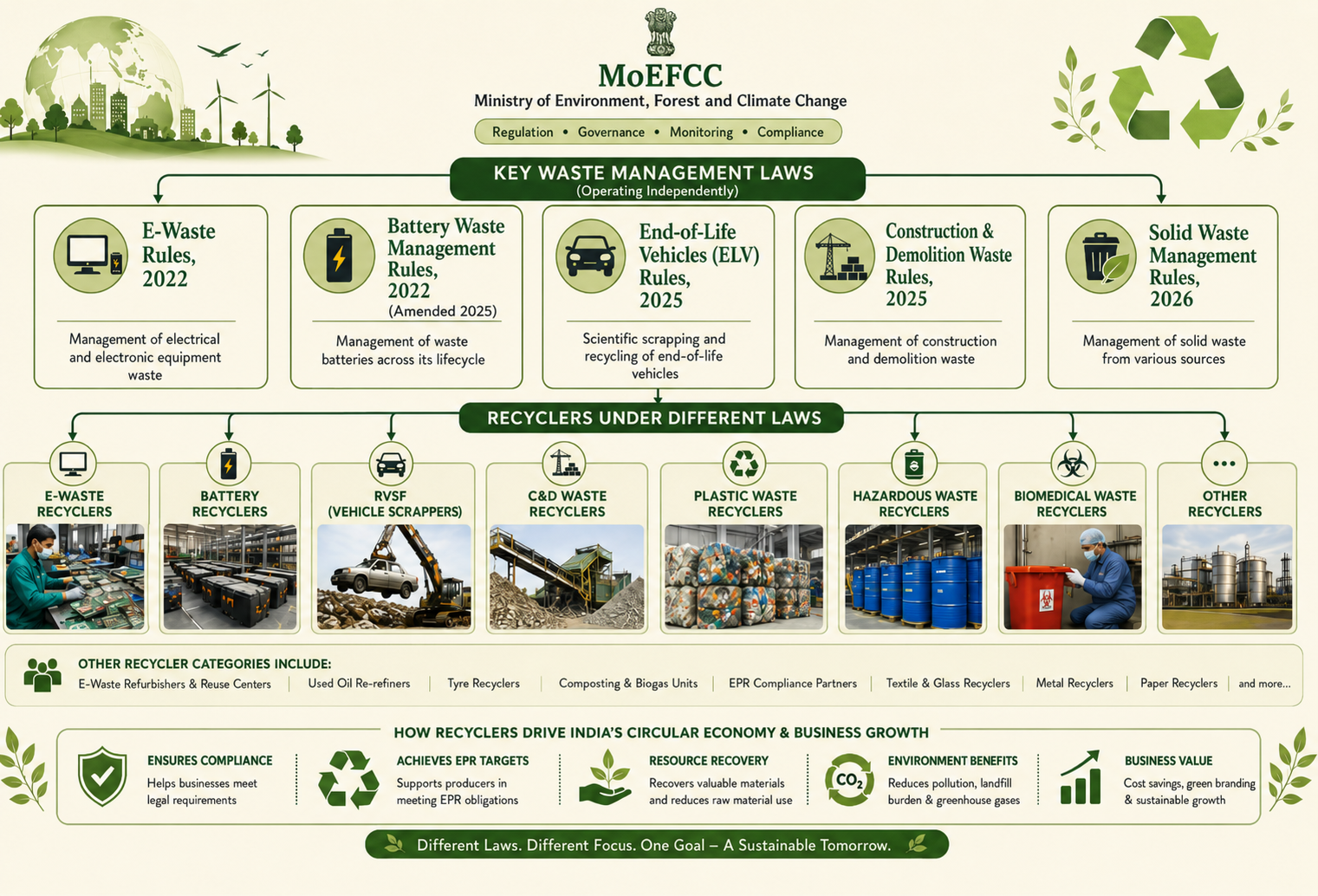
Authorized recyclers play an important role in waste management and EPR systems by ensuring proper collection, segregation, recycling, processing, and environmentally safe disposal of waste materials according to applicable environmental guidelines. They help recover useful materials from waste and support sustainable recycling practices.
Authorized recyclers also generate EPR certificates through proper recycling activities, which help producers and businesses fulfill their assigned EPR targets and responsibilities. Recyclers are generally required to work with registered producers, importers, manufacturers, and other authorized waste-generating entities under applicable waste management systems.
4. How to Become an Authorized Recycler?
Businesses involved in recycling activities are generally required to register on the CPCB online portal and obtain authorization according to applicable waste management rules and environmental guidelines. The process usually includes submission of company details, facility information, required documents, and compliance-related information related to the recycling unit.
Authorized recyclers are required to maintain proper recycling records, follow environmental safety standards, submit required reports, and fulfill their own recycling responsibilities and targets under different waste management frameworks.
5. Why is working with authorized recyclers important for businesses?
Working with authorized recyclers helps businesses ensure proper recycling, collection, processing, and environmentally safe disposal of waste materials according to applicable waste management rules and environmental guidelines. Authorized recyclers also generate EPR certificates through proper recycling activities on the centralized CPCB portal, which help producers and businesses fulfill their assigned EPR targets and compliance responsibilities.
Businesses are generally required to work with registered recyclers because failure to fulfill EPR targets or working with unauthorized entities may lead to environmental compensation, penalties, and other regulatory actions under applicable waste management frameworks.
6. Why are digital EPR certificates important in recycling systems?
Digital EPR certificates help track verified recycling activities and support transparency in EPR compliance systems. These certificates are generated through authorized recycling activities on centralized portals and help businesses demonstrate fulfillment of their assigned recycling responsibilities and EPR targets.
The digital certificate system also helps improve monitoring, reduce unauthorized recycling activities, and strengthen accountability among producers, recyclers, and other stakeholders involved in waste management systems.
7. What are the consequences of not following recycling and environmental guidelines?
Failure to follow recycling and environmental guidelines may lead to suspension or cancellation of registration, environmental compensation, financial penalties, and other regulatory actions according to applicable waste management rules. Authorities may also take action if false information, manipulated documents, or improper waste handling practices are identified during compliance monitoring.
Under the “Polluter Pays” principle, businesses and recyclers may be held responsible for environmental damage caused due to non-compliance or improper recycling practices. Serious violations can also affect business operations, compliance status, and overall environmental responsibility.
8. Challenges in Recycling Systems
Recycling systems face several challenges such as improper waste segregation, lack of public awareness, insufficient collection systems, and improper disposal practices. Mixing recyclable waste with general waste often reduces recycling efficiency and makes waste processing more difficult.
Many recycling systems also face challenges related to limited recycling infrastructure, transportation issues, unorganized waste collection, and lack of coordination among different stakeholders. These issues can affect proper recycling, resource recovery, and environmentally responsible waste management practices.
9. Conclusion
Effective recycling systems depend on proper coordination between producers, recyclers, collection centers, regulatory authorities, and other stakeholders involved in waste management activities. Proper implementation of recycling processes, record maintenance, authorized recycling operations, and compliance monitoring helps improve transparency and accountability within waste management systems.
With increasing focus on environmental compliance and responsible waste handling, authorized recycling systems and digital compliance mechanisms are becoming important parts of modern waste management frameworks. Proper recycling practices and compliance systems can help strengthen resource recovery, improve monitoring processes, and support safer and more organized waste management operations.
10. Frequently Asked Questions (FAQs)
1. What is the difference between recyclers and refurbishers?
Recyclers process waste materials to recover useful raw materials through recycling operations, while refurbishers repair, restore, or improve used products and components so they can be reused again instead of being discarded as waste.
2. What restrictions are applicable to authorized recyclers?
Authorized recyclers are generally required to operate according to approved recycling capacity, environmental guidelines, and waste management rules. They may also be required to provide geo-tagged facility images, recycling infrastructure details, operational proof, and other compliance-related information during registration and monitoring activities.
3. What documents are generally required for recycler registration?
Common documents required for recycler registration may include company registration documents, GST certificate, PAN card, Consent to Operate (CTO), authorization certificates, facility details, geo-tagged images of the recycling unit, machinery details, storage area information, and operational video proof according to applicable waste management guidelines.
4. What is the “Polluter Pays” principle?
The “Polluter Pays” principle means that businesses or entities responsible for environmental pollution or non-compliance may be required to pay environmental compensation and bear the cost of environmental damage caused due to improper waste management or recycling practices.
5. Why is maintaining proper recycling records important for recyclers?
Maintaining proper recycling records helps recyclers track waste collection, processing quantity, recycling activities, EPR certificates, and fulfillment of compliance responsibilities.These records are generally required to be submitted quarterly and annually to the concerned authorities as part of the compliance and monitoring process.