Table of Contents
Toggle1. What are Environmental Authorities?
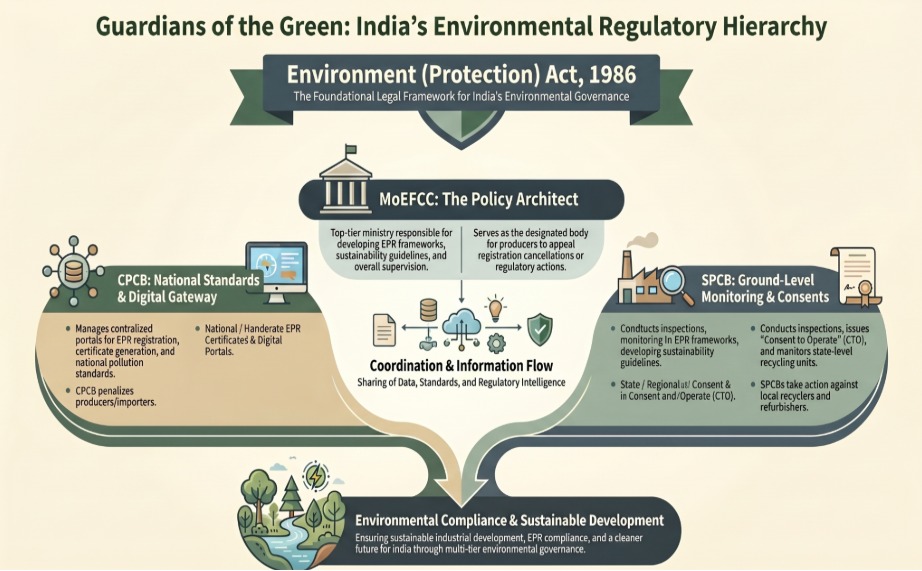
Environmental authorities are government bodies responsible for environmental protection, pollution control, waste management regulation, and implementation of environmental guidelines and compliance systems in India. These authorities help monitor industries, recycling activities, waste management operations, and environmentally responsible practices across different sectors. The environmental regulatory system mainly includes the Ministry of Environment, Forest and Climate Change (MoEFCC) at the central level, the Central Pollution Control Board (CPCB) at the national level, and State Pollution Control Boards (SPCBs) at the regional or state level. These authorities work together to regulate waste management systems, recycling activities, environmental compliance, and pollution control frameworks across the country.2.Role of MoEFCC
The Ministry of Environment, Forest and Climate Change (MoEFCC) is the main environmental ministry responsible for developing environmental policies, waste management rules, EPR frameworks, and sustainability guidelines in India. It helps introduce regulations related to plastic waste, e-waste, battery waste, hazardous waste, and other environmental management systems. MoEFCC also supports environmental protection initiatives, pollution control measures, and sustainable development practices across industries and businesses. It plays an important role in strengthening environmental governance and improving responsible waste management systems in the country.3. Role of CPCB
The Central Pollution Control Board (CPCB) works under MoEFCC and acts as the central authority for implementing EPR frameworks, environmental monitoring, pollution control activities, and waste management compliance systems in India. CPCB manages centralized online portals for registration, filing returns, maintaining records, and digital EPR certificate systems for different stakeholders involved in waste management activities. CPCB also monitors producer registration, recycling activities, EPR target fulfillment, compliance reporting, audits, inspections, and environmentally responsible recycling practices under different waste management frameworks. It additionally issues technical guidelines and standards related to safe collection, storage, transportation, and recycling systems.4. Role of SPCBs
State Pollution Control Boards (SPCBs) are state-level environmental authorities responsible for monitoring industries, recycling units, waste management facilities, and pollution control activities within their respective states. SPCBs help implement environmental rules, conduct inspections and audits, and ensure that recycling and waste processing activities follow approved environmental standards and guidelines. SPCBs also issue authorizations, Consent to Operate (CTO), and registrations for recyclers, refurbishers, and waste management units through the centralized CPCB portal. They maintain monitoring records, compile operational reports, and may take regulatory actions such as suspension, cancellation of registration, or environmental compensation in cases of non-compliance or violation of environmental guidelines.5. Importance of Environmental Authorities
Environmental authorities play an important role in regulating waste management systems, recycling activities, pollution control measures, and environmental compliance practices across different industries and sectors. They help ensure that businesses, recyclers, producers, and other stakeholders follow approved environmental guidelines and waste management rules. These authorities also support monitoring, inspections, registration systems, compliance reporting, environmental safety standards, and implementation of responsible waste management practices. Proper coordination between environmental authorities helps improve transparency, accountability, and environmentally responsible operations within waste management and recycling systems.6. How Environmental Authorities Support EPR Compliance?
Environmental authorities help support EPR compliance by regulating registration systems, monitoring recycling activities, maintaining digital compliance portals, and ensuring implementation of applicable waste management rules and environmental guidelines. Environmental authorities also monitor EPR certificates, annual and quarterly reporting systems, recycling records, waste tracking activities, and fulfillment of assigned responsibilities and targets. They conduct inspections, audits, compliance verification, and regulatory monitoring to improve transparency, accountability, and environmentally responsible waste management practices.7. What is the role of the Implementation Committee in EPR systems?
The Implementation Committee works under the chairpersonship of the CPCB Chairman and helps monitor the implementation of EPR and waste management systems. The committee supports policy improvements, resolves operational difficulties, and helps improve digital compliance and online portal systems according to changing waste management requirements. The committee also reviews recycling and material recovery targets periodically to ensure that compliance systems and recycling standards remain aligned with technological developments and evolving environmental practices.8. How do environmental authorities support businesses?
Environmental authorities support businesses under different waste management frameworks by providing structured digital systems, compliance portals, technical guidelines, monitoring mechanisms, and organized registration processes related to waste management and EPR systems. These systems help businesses maintain compliance records, fulfill assigned targets, and support responsible recycling and waste management practices. Authorities also help regulate recycling systems, improve transparency, address operational challenges, and support smoother implementation of environmental compliance processes through inspections, reporting systems, audits, and digital monitoring platforms.9. Conclusion
Environmental authorities play a major role in maintaining organized waste management and EPR compliance systems across different industries and sectors. Through registration systems, inspections, digital compliance portals, audits, reporting mechanisms, and regulatory monitoring, these authorities help ensure proper implementation of environmental guidelines and responsible waste management practices. With increasing focus on recycling, sustainability, and environmental accountability, regulatory authorities continue to strengthen compliance systems, digital monitoring mechanisms, and environmentally responsible operational standards. Effective coordination between businesses, recyclers, producers, and environmental authorities helps support safer, more transparent, and better-regulated waste management systems in India.10. Frequently Asked Questions (FAQs)
1. Who are the main environmental authorities in India?
The main environmental authorities in India include the Ministry of Environment, Forest and Climate Change (MoEFCC), Central Pollution Control Board (CPCB), and State Pollution Control Boards (SPCBs).
2. Who penalizes different stakeholders under EPR systems?
The CPCB generally takes regulatory actions and levies Environmental Compensation on non-compliant producers, importers, and manufacturers, while SPCBs may take action against recyclers, refurbishers, and waste management units for violations of environmental guidelines and waste management rules.
3. Where do Producers go to appeal a cancelled registration?
Producers may submit appeals related to suspension, cancellation, or other regulatory actions to the designated authority under the Ministry of Environment, Forest and Climate Change (MoEFCC) according to applicable environmental guidelines and waste management rules.
4. What is EPR compliance?
EPR compliance is a waste management system where producers, importers, and manufacturers are responsible for collection, recycling, and environmentally safe disposal of waste generated from their products.
5. What are EPR certificates and which authority regulates them?
EPR certificates are digital certificates which act as proof of fulfillment of EPR responsibilities for producers and businesses. These certificates are generated through the centralized CPCB portal, and the CPCB regulates related compliance and pricing mechanisms under applicable waste management frameworks.