Table of Contents
ToggleWhat is a Forest Ecosystem?
A forest ecosystem is a natural environment where trees, plants, animals, microorganisms, soil, water, and climate interact with one another to form a balanced and interconnected system. These components work together to support biodiversity, nutrient cycling, and ecological stability.
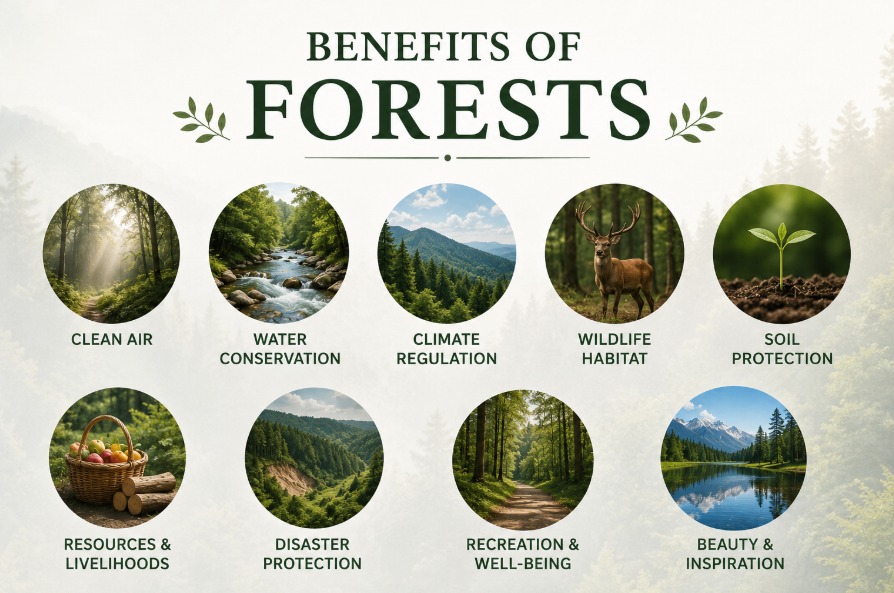
Forests are much more than collections of trees. They provide essential environmental services such as clean air, water conservation, climate regulation, wildlife habitats, and carbon storage, making them one of the most important ecosystems on Earth.
Why Should We Care About Forests?
Forests are much more than collections of trees. They provide clean air, support water resources, regulate climate, protect biodiversity, and contribute to human well-being. Many of the resources people rely on every day are directly or indirectly linked to healthy forest ecosystems.
Even people living in cities benefit from forests through cleaner air, rainfall regulation, carbon storage, and environmental stability. Their importance extends far beyond the areas where they are located.
How Do Forests Support Human Health and Well-Being?
Forests help improve air quality by absorbing pollutants and releasing oxygen. Green spaces and forested areas are also associated with reduced stress levels, improved mental well-being, and opportunities for recreation and outdoor activities.
In many regions, forests also provide food, medicinal plants, and livelihoods for local communities. Their benefits support both environmental and social well-being.
Why Are Forests Important for Wildlife?
Forests provide essential habitats where countless species of animals, birds, insects, and plants can find food, shelter, water, and breeding grounds. Many species depend entirely on forest ecosystems for their survival and cannot thrive elsewhere.
Healthy forests support biodiversity by maintaining balanced ecosystems and protecting wildlife from environmental threats. Conserving forests helps ensure the survival of species and preserves the natural relationships that keep ecosystems functioning effectively.
What Happens When Forests Are Lost?
When forests are lost, ecosystems become less stable, wildlife habitats are destroyed, and biodiversity declines. Many plant and animal species depend on forests for food, shelter, and survival, making them particularly vulnerable to habitat loss.
Forest loss can also contribute to soil erosion, water scarcity, increased greenhouse gas emissions, and climate change. In addition, communities that rely on forests for resources, livelihoods, and environmental benefits may face significant social and economic challenges.
What Threats Do Forests Face Today?
Forests face numerous threats, including deforestation, illegal logging, forest fires, urban expansion, mining activities, and infrastructure development. These activities can reduce forest cover, destroy habitats, and disrupt the natural balance of forest ecosystems.
Climate change, pollution, and unsustainable use of natural resources also place increasing pressure on forests. If these threats are not addressed, they can lead to biodiversity loss, reduced carbon storage, and long-term environmental degradation.
What Benefits Do Forests Provide to Communities?
Forests provide communities with essential resources such as clean water, food, fuel, timber, medicinal plants, and livelihood opportunities. Many rural and indigenous communities depend on forests for their daily needs and economic activities.
In addition, forests help improve air quality, regulate local climates, reduce the risk of soil erosion and floods, and create recreational and tourism opportunities. These benefits contribute to both environmental sustainability and community well-being.
How Can Individuals Contribute to Forest Conservation?
Individuals can contribute to forest conservation by reducing paper waste, recycling materials, supporting sustainable products, and participating in tree plantation and afforestation initiatives. These actions help reduce pressure on forest resources and promote environmental sustainability.
People can also support conservation programs, avoid activities that damage natural habitats, and spread awareness about the importance of forests. Small everyday choices can collectively make a significant contribution to protecting forest ecosystems for future generations.
Conclusion
Forests are far more than collections of trees as they are complex ecosystems that support biodiversity, regulate climate, protect water resources, and provide countless benefits to people and communities. From improving air quality and supporting wildlife to sustaining livelihoods and helping combat climate change, forests play a vital role in maintaining environmental balance.
Protecting forests requires collective action from governments, organizations, communities, and individuals. By adopting sustainable practices and supporting conservation efforts, we can help preserve these valuable ecosystems and ensure that future generations continue to benefit from the essential services forests provide.
Frequently Asked Questions (FAQs)
1.Why are forests called the lungs of the Earth?
Forests are often called the "lungs of the Earth" because they absorb carbon dioxide and release oxygen through photosynthesis. This process helps maintain the balance of gases in the atmosphere and supports life on Earth.
2. Simple Habits That Support Forest Conservation
Simple habits such as reducing paper waste, recycling, using sustainable products, and planting trees can help protect forests. Supporting conservation initiatives and spreading awareness also contribute to long-term forest conservation efforts.
3. What Is Deforestation?
Deforestation is the large-scale removal of forests and trees, often to make land available for agriculture, urban development, mining, or infrastructure projects. It results in the reduction of forest cover and the loss of natural habitats.
4. Can Degraded Forests Be Restored?
Yes, degraded forests can often be restored through afforestation, reforestation, habitat restoration, and sustainable forest management practices. These efforts help improve biodiversity, ecosystem health, and the environmental benefits provided by forests.
5. Why Are Forests Important for Biodiversity?
Forests are home to a large variety of plants, animals, insects, fungi, and microorganisms, making them some of the most biodiverse ecosystems on Earth. They provide food, shelter, and breeding habitats for countless species. By supporting biodiversity, forests help maintain ecological balance, strengthen ecosystem resilience, and ensure the survival of many species that depend on forest habitats.