Table of Contents
ToggleWhat is an EPR Certificate?
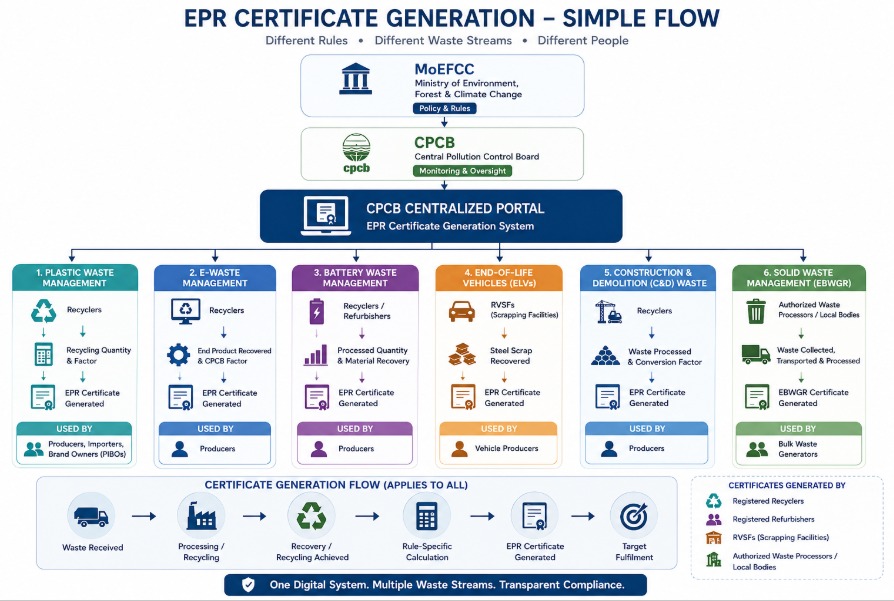
An EPR Certificate is a digital compliance credit generated through a centralized online portal managed by the Central Pollution Control Board in favour of registered entities like recyclers, refurbishers, or Registered Vehicle Scrapping Facilities (RVSFs) who process the waste under applicable waste management rules. It serves as proof that a specified quantity of waste has been recycled, recovered, refurbished, or processed through approved channels. Businesses use these certificates to fulfil their EPR targets and demonstrate compliance with applicable environmental regulations.
Why are EPR Certificates important for businesses?
EPR Certificates help businesses fulfil their assigned Extended Producer Responsibility (EPR) targets under applicable waste management rules. By purchasing certificates generated through authorized recycling or waste processing activities, businesses can demonstrate compliance with their environmental obligations and fulfil their regulatory requirements.
EPR Certificates also support transparency and accountability within the compliance system by linking verified recycling activities with producer targets. Maintaining adequate certificates helps businesses avoid environmental compensation, penalties, and other regulatory actions that may arise from non-compliance.
Who is Required to Fulfil EPR Obligations?
EPR obligations generally apply to producers, manufacturers, importers, and brand owners who introduce products into the market. Depending on the applicable waste management rules, these entities are responsible for ensuring that a specified quantity of waste generated from their products is collected, recycled, refurbished, or processed through authorized channels.
The exact obligations may vary across different waste streams such as plastic waste, e-waste, battery waste, and end-of-life vehicles. Businesses must monitor their assigned targets, maintain compliance records, and fulfil their responsibilities according to the requirements of the relevant environmental regulations.
Who Can Generate EPR Certificates?
EPR Certificates are generated through the centralized online portal managed by the Central Pollution Control Board (CPCB). However, the certificates are generated in favor of authorized entities that carry out eligible recycling, refurbishment, recovery, or waste processing activities under the applicable waste management rules.
Depending on the regulatory framework, EPR Certificates may be generated for registered recyclers, refurbishers, Registered Vehicle Scrapping Facilities (RVSFs), and other authorized waste processing entities. Once generated on the CPCB portal, these certificates can be purchased by producers and businesses to fulfil their assigned EPR obligations and compliance targets.
What are the benefits of the EPR Certificate system?
The EPR Certificate system benefits businesses, recyclers, regulators, and the environment by creating a structured mechanism for fulfilling waste management responsibilities. It helps businesses achieve EPR compliance, supports authorized recycling and recovery activities, improves transparency in waste management, and strengthens accountability among different stakeholders involved in the compliance process.
The system also promotes resource recovery, encourages environmentally sound recycling practices, supports the growth of formal recycling infrastructure, and helps authorities monitor compliance more effectively. By linking verified waste processing activities with compliance obligations, EPR Certificates contribute to sustainable waste management and the development of a circular economy.
What Records Should Businesses Maintain for EPR Compliance?
Businesses should maintain records related to product sales, quantities placed in the market, EPR targets, waste collected, recycled or refurbished quantities, EPR certificates generated or purchased, annual and quarterly returns, and transactions carried out through compliance portals. They should also maintain records of agreements with authorized recyclers, waste processors, collection partners, and other stakeholders involved in fulfilling EPR obligations.
Proper record maintenance helps businesses track compliance targets, monitor certificate utilization, verify fulfilment of EPR responsibilities, and support audits, inspections, and regulatory reporting requirements.
What is the Criteria for EPR Certificate Generation?
EPR Certificates are generated based on verified recycling, recovery, refurbishment, or waste processing activities carried out by authorized entities under the applicable waste management rules. The quantity of certificates generated depends on factors such as the amount of waste processed, material recovery achieved, recycling efficiency, and the specific criteria prescribed under the relevant environmental framework.
Different waste streams follow different certificate generation mechanisms. For example, certificates may be based on recycled output, recovered materials, steel recovery, processing quantities, or other approved parameters depending on the applicable rules. These activities are verified and recorded through centralized digital compliance portals before certificates are generated and made available for compliance purposes.
What Happens if a Company Fails to Meet its EPR Obligations?
Failure to fulfil EPR obligations may result in environmental compensation, penalties, and other regulatory actions under the applicable waste management rules. Businesses may also face increased scrutiny from regulatory authorities, particularly if they fail to meet assigned targets, maintain adequate EPR certificates, or comply with reporting and documentation requirements.
In many cases, unfulfilled EPR obligations are carried forward and must still be fulfilled within the prescribed timelines. Continuous non-compliance, submission of false information, or serious violations may lead to suspension or cancellation of registrations, legal action, and other enforcement measures by the concerned authorities.
Conclusion
EPR Certificates play an important role in modern waste management systems by helping businesses fulfil their environmental responsibilities through verified recycling, recovery, refurbishment, and waste processing activities. They support transparency, accountability, regulatory compliance, and resource recovery while strengthening formal recycling ecosystems. As EPR frameworks continue to evolve across different waste streams, understanding and effectively managing EPR Certificates has become essential for businesses seeking to achieve compliance, avoid regulatory risks, and contribute to environmentally responsible waste management practices.
For businesses seeking assistance with EPR registration, EPR target fulfilment, documentation, certificate management, and compliance reporting, Axis Consultants provides professional support for end-to-end environmental compliance requirements.
Frequently Asked Questions (FAQs)
1.How are E-Waste EPR Certificates calculated?
They are calculated by multiplying the final quantity of the recycled end product by a specific conversion factor set by the CPCB.
2. Who issues or generates EPR Certificates?
The Central Pollution Control Board (CPCB) generates them through a centralized online portal in favour of registered recyclers, refurbishers, or vehicle scrapping facilities.
3. Where are EPR Certificates traded?
They are traded between registered recyclers and producers through formally established online trading platforms managed by the government
4. What happens once a producer buys an EPR Certificate?
The certificate value is automatically adjusted against the producer’s current or leftover environmental liability, and then the certificate is cancelled or extinguished.
5. Are EPR Certificates Applicable to All Waste Streams?
EPR Certificate mechanisms are applicable only under specific waste management frameworks such as Plastic Waste, E-Waste, Battery Waste, End-of-Life Vehicles (ELVs), and certain other regulated waste streams. The method of certificate generation, utilization, and compliance requirements may vary depending on the applicable environmental rules.